Heat-Smart Tent Configurations for Peak Summer Events
You're planning an outdoor event for June, July, or August in Northeastern Pennsylvania. You know guests will show up expecting shade, airflow, and somewhere comfortable to sit when temperatures climb into the 80s and 90s.
A poorly positioned tent turns into a heat trap. A well-designed setup keeps guests comfortable, engaged, and willing to stay through the entire event.
This guide explains exactly how to configure tents, improve airflow, and create shaded layouts that work even during the hottest weeks of summer.
Table of Contents
- Which Type of Event Planner Are You?
- Choose the Right Tent Location
- Maximize Summer Tent Ventilation
- Create Shaded Tent Layouts for Different Activities
- Select the Right Tent Style
- Plan Comfortable Seating Areas
- Include Cooling Amenities
- Consider Event Timing
- Design for Easy Guest Movement
- Prepare for Changing Summer Weather
- FAQ
Which Type of Event Planner Are You?
🎪 First-Time Event Host
You're organizing your first large outdoor event and aren't sure how many tents you need or where to position them.
Focus on: Location basics, ventilation strategies, and understanding tent styles that work for summer heat.
💼 Corporate Event Coordinator
You've organized events before, but this year's company picnic or outdoor conference is larger than previous years.
Focus on: Multi-tent layouts, guest circulation patterns, and creating dedicated zones for dining, registration, and entertainment.
💒 Wedding or Festival Planner
You're managing a wedding, graduation party, or community festival where guest comfort directly affects the event's success.
Focus on: Seating comfort, cooling amenities, activity-based tent zones, and timing events around the hottest parts of the day.
Choose the Right Tent Location
The single most effective way to reduce heat inside a tent is to position it where it receives natural shade during the hottest hours—typically between 1 PM and 5 PM.
Existing trees, nearby buildings, or strategic positioning based on the sun's path can drop interior temperatures by 10 to 15 degrees without any additional equipment.
⚠️ Avoid these surfaces: Asphalt, concrete, and dark pavement absorb and radiate heat long after the sun moves. If you must set up on pavement, expect to add fans or cooling stations.
For a deeper breakdown of how placement affects both shade coverage and guest movement, read our guide on tent placement strategies for summer crowd flow and shade.
Maximize Summer Tent Ventilation
Heat doesn't just come from the sun—it builds when air stops moving.
A well-ventilated tent prevents hot, stagnant air from accumulating and creates a noticeable difference in guest comfort.
↓ What Keeps Tents Cooler
- Keep tent sides open whenever weather permits
- Position entrances to capture prevailing summer breezes
- Leave adequate space between multiple tents
- Avoid blocking airflow with decorative panels or equipment
- Use frame tents for better air circulation (no center poles)
↑ What Traps Heat
- Closing all tent sides to "protect" guests
- Placing tents too close together
- Positioning entrances away from natural wind direction
- Using heavy drapes or panels that block airflow
- Overcrowding seating areas inside tents
💡 Pro Tip: If afternoon storms are forecast, leave sides open until weather arrives, then close only the sides facing the rain. Guests stay dry, and you still maintain airflow from the opposite direction.
Create Shaded Tent Layouts for Different Activities
Not every area of your event experiences the same level of activity or heat buildup.
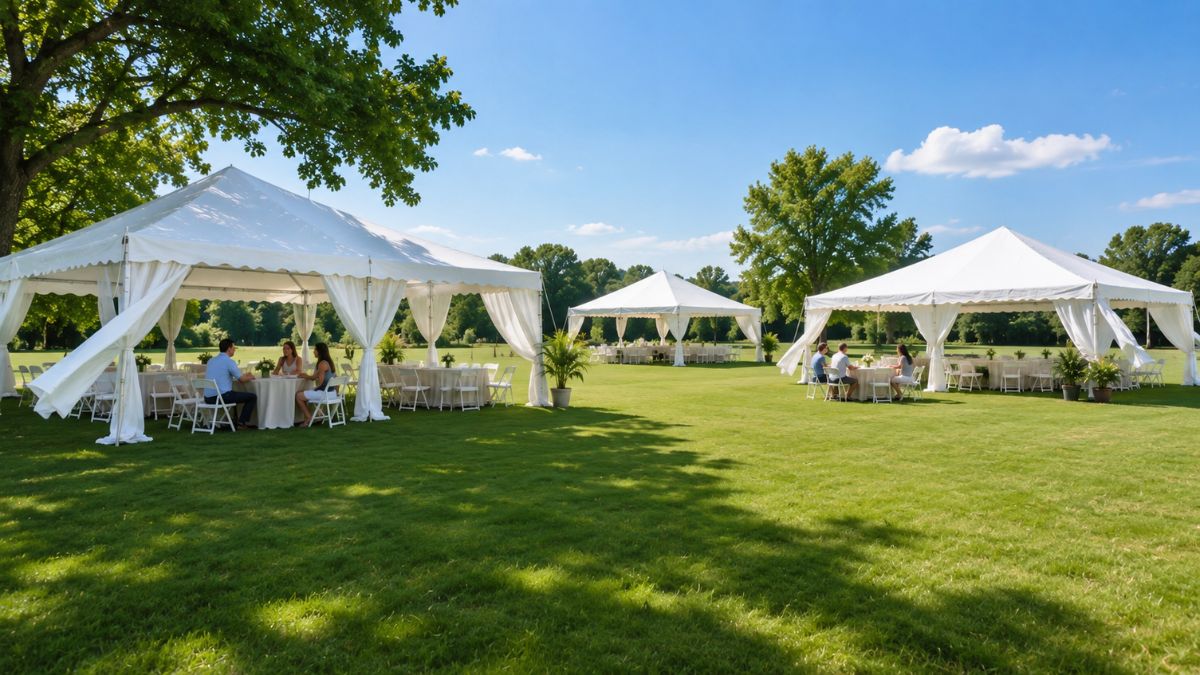
Instead of cramming everything under one massive tent, separate activities into dedicated zones with their own covered areas:
🍽️ Dining Area
Guests spend the most time seated here. Prioritize shade, ventilation, and comfortable spacing between tables.
🎤 Entertainment Zone
Stage, speakers, and performance areas generate both heat and foot traffic. Keep open sides for sound projection and airflow.
📋 Registration / Check-In
Guests arrive hot and tired. A shaded check-in area with fans makes a strong first impression.
🛍️ Vendor / Display Area
Vendors need shade to protect products and keep staff comfortable during long setups.
🍹 Beverage / Refreshment Station
High traffic area. Needs excellent ventilation and easy access from multiple directions.
🪑 Rest / Lounge Area
A quieter, shaded space where guests can escape crowds and heat. Include extra seating and water stations.
Separating activities reduces congestion, improves airflow, and gives guests more control over their comfort throughout the event.
If you're still determining how much covered space you'll need, our article on choosing the right tent dimensions for your event offers helpful planning guidance.
Select the Right Tent Style
The two most common tent styles for summer events are frame tents and pole tents.
Frame Tents
✓ No center poles — better airflow and flexible layouts
✓ Versatile placement — works on pavement, grass, or uneven terrain
✓ Excellent for seating layouts — no poles blocking tables or chairs
Best for: Corporate events, vendor booths, dining areas, registration zones
Pole Tents
✓ Classic appearance — high peaks and elegant draping
✓ Cost-effective — often less expensive for large coverage areas
✗ Center poles — may limit layout flexibility
✗ Requires staking — needs grass or soft ground
Best for: Weddings, graduations, community celebrations
For a detailed comparison of both styles, read our guide on comparing frame tents and pole tents.
You'll also find a full selection of white event tents for outdoor gatherings that accommodate everything from intimate celebrations to larger community functions.
Plan Comfortable Seating Areas
Heat affects people differently based on age, activity level, and how long they've been standing or walking.
Providing ample shaded seating in multiple locations ensures guests can:
- Eat meals comfortably without direct sun exposure
- Rest between activities or entertainment
- Socialize without feeling rushed to leave the heat
- Watch performances or speakers from comfortable, shaded positions
💡 Pro Tip: Space tables 4 to 5 feet apart instead of the typical 3 feet. The extra clearance improves airflow between guests and makes the space feel less cramped during hot weather.
For additional seating strategies tailored to large outdoor gatherings, visit our article on managing seating comfort at large outdoor summer events.
Include Cooling Amenities
Small additions make a significant difference during peak summer heat.
💧 Hydration Stations
Place water stations in multiple locations—near entrances, seating areas, and entertainment zones. Keep them stocked and visible.
💨 Portable Fans
Strategically placed fans keep air moving in enclosed areas. Position them near seating and registration zones where guests linger longest.
🌫️ Misting Fans
For extremely hot days (90°F+), misting fans provide immediate cooling relief in high-traffic areas like entrances and beverage stations.
🍹 Covered Beverage Stations
Keep drinks cold and staff comfortable. Shade also prevents ice from melting too quickly.
🪑 Dedicated Rest Areas
Create a quieter shaded zone away from crowds where guests can cool down and recharge before returning to the event.
These features help guests stay hydrated, comfortable, and willing to remain at your event longer—even when temperatures climb.
For even more options, explore our party tent accessories for outdoor events, including equipment that improves guest comfort and event functionality.
Consider Event Timing
If your schedule allows flexibility, time activities around peak heat hours (typically 1 PM to 5 PM in Pennsylvania).
🌅 Morning (Before 12 PM)
- Guest arrivals and registration
- Active games or sports
- Setup and vendor placement
- Outdoor photos
☀️ Afternoon (12 PM – 5 PM)
- Meal service under tents
- Seated entertainment or speakers
- Vendor browsing
- Shaded socializing
🌇 Evening (After 5 PM)
- Dancing or live music
- Outdoor activities resume
- Socializing outside tents
- Photo opportunities in softer light
Guests appreciate having shaded, seated activities available during the hottest part of the day.
Design for Easy Guest Movement
Comfort isn't only about temperature—it's also about how easily guests can navigate your event.
Crowded pathways, bottlenecks at entrances, and unclear signage all contribute to frustration—especially when guests are already hot and tired.
🚩 Red Flags: Poor Crowd Flow
🚩 Walkways less than 6 feet wide
🚩 Only one entrance/exit to main tent
🚩 Food and beverage stations too close together
🚩 No clear path between major activity zones
💡 Pro Tip: Walk your layout before guests arrive. If you have to squeeze past chairs or tables, your pathways are too narrow.
Our guide on managing crowd flow and comfort at outdoor events explores additional layout strategies that help create safer, more enjoyable summer gatherings.
Prepare for Changing Summer Weather
Summer weather in Pennsylvania doesn't stay predictable for long.
Even on scorching days, afternoon showers, gusty winds, or sudden temperature drops are always possible.
⚠️ What to confirm with your rental company:
- Proper anchoring for wind resistance
- Tent sidewalls available if weather shifts
- Contingency layouts if conditions change
- Emergency contact for day-of adjustments
Work with an experienced rental company that understands local weather patterns and can recommend the right tent configuration, secure installation, and accessories based on your venue and guest count.
For more planning resources, browse our complete collection of tent planning articles, covering layouts, sizing, seasonal strategies, and outdoor event preparation.
Frequently Asked Questions
What is the best location for a tent during summer events?+
Place tents where they receive natural shade during the hottest parts of the day, such as under existing trees or near buildings. Avoid positioning tents over asphalt or dark pavement, which absorb and radiate heat long after the sun rises.
How can I improve ventilation in a summer event tent?+
Keep tent sides open whenever possible, position entrances to capture prevailing breezes, leave adequate space between tents, and avoid blocking airflow with decorative panels or equipment. Frame tents (without center poles) also improve circulation.
Should I use one large tent or multiple smaller tents for summer events?+
Multiple tents designed for specific purposes (dining, registration, vendor displays, rest areas) reduce congestion and give guests more options to find cooler spaces throughout the day. Separate activity zones also improve airflow and prevent heat buildup.
What cooling amenities should I include at outdoor summer events?+
Consider water stations in multiple locations, portable fans near seating and registration areas, misting fans for extremely hot days (90°F+), covered beverage stations, and dedicated rest areas where guests can escape crowds and cool down.
What tent style is best for hot weather events?+
Frame tents offer flexible placement without center poles and excellent airflow, making them ideal for hot weather. Pole tents provide a classic appearance and work well when properly ventilated. Both styles are effective when positioned correctly and kept open on multiple sides.
How far apart should I space tables inside a tent during summer?+
Space tables 4 to 5 feet apart instead of the typical 3 feet. The extra clearance improves airflow between guests and makes the space feel less cramped during hot weather, while also making it easier for guests to move around comfortably.
When should I schedule outdoor activities during hot summer days?+
Schedule active games, sports, and outdoor photos before 12 PM or after 5 PM. Plan meal service, speeches, and seated entertainment under covered areas during the hottest afternoon hours (1 PM to 5 PM). Guests appreciate having shaded activities available when temperatures peak.
What should I do if afternoon storms are forecast on event day?+
Keep tent sides open until weather arrives, then close only the sides facing the rain. Guests stay dry while you maintain airflow from the opposite direction. Confirm with your rental company that sidewalls are available and that tents are properly anchored for wind.
Stay Cool with the Right Tent Setup
A successful outdoor event balances comfort, safety, and functionality. By focusing on smart tent placement, proper ventilation, and effective shaded layouts, you'll give guests a more enjoyable experience—even during the warmest days of summer.
Whether you're planning a wedding, graduation party, corporate picnic, festival, or community event, CSE Services offers high-quality tents, accessories, and expert guidance to help your event run smoothly from setup to teardown.
Book Online Now!No pressure. No pitch. Just practical guidance for your summer event.