
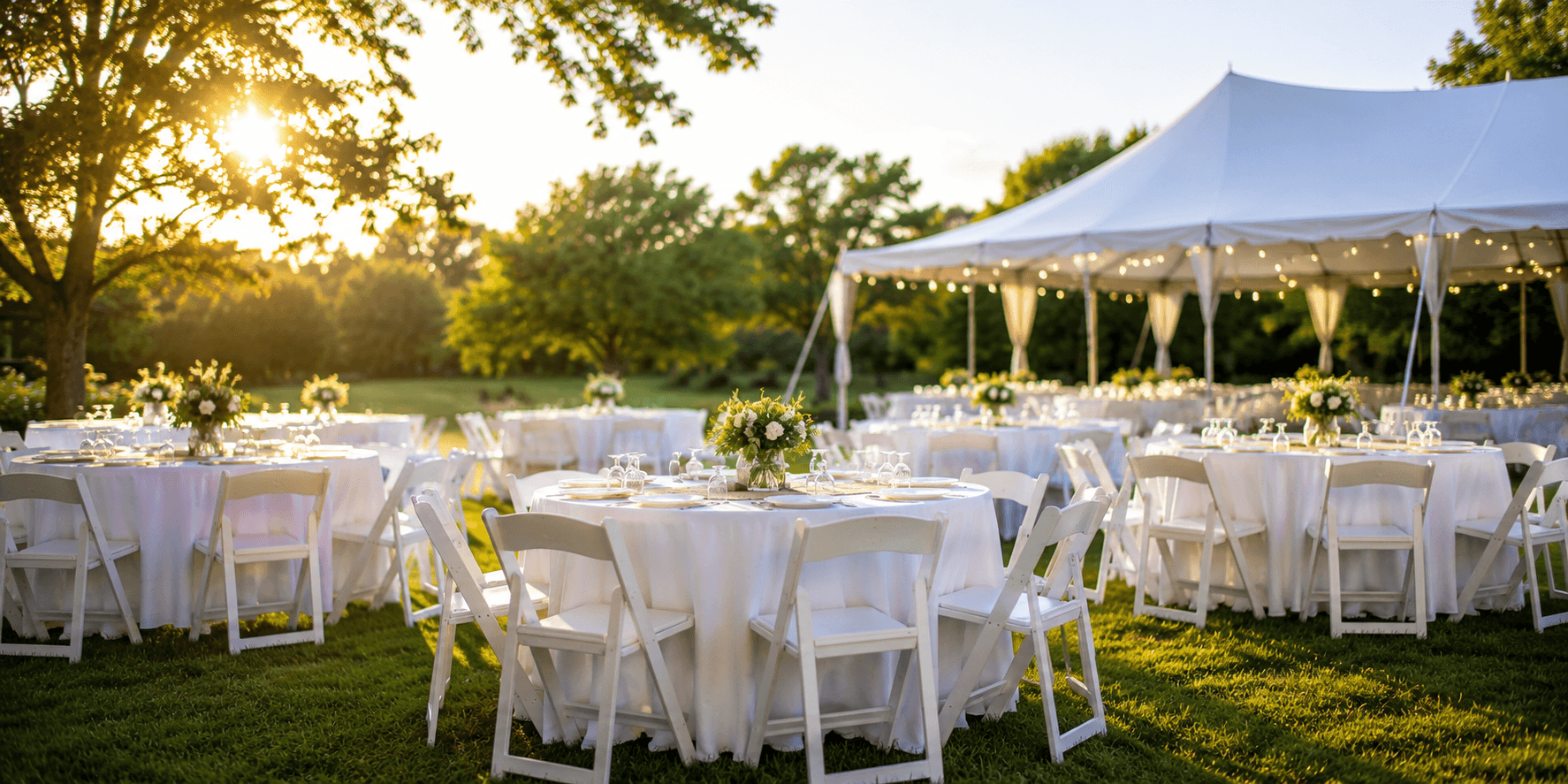
Have you ever been to a summer event where there were plenty of chairs, but people still kept standing, shifting around, or moving into shaded corners? Seating comfort is not just about having enough places to sit. It is about where the seating goes, how it is spaced, how much shade is available, and how easily guests can move between food, activities, restrooms, and gathering areas.
Summer seating comfort matters because warm-weather events can feel tiring fast when chairs are too close together, placed in direct sun, or disconnected from the main event layout. At larger outdoor gatherings, small seating decisions can affect guest flow, heat exposure, accessibility, and the overall pace of the event.
This guide explains how to think through heat-ready seating, guest comfort planning, and outdoor seating layouts so summer events feel more organized, practical, and comfortable from the start.
What Does Summer Seating Comfort Mean?
Summer seating comfort refers to how well seating supports guests during warm outdoor events. It includes chair type, table spacing, shade, airflow, surface conditions, walking room, accessibility, and how seating connects to the rest of the event.
People often search for summer seating comfort because they want to avoid common problems: guests sitting in direct sunlight, crowded table layouts, long walks to food or drinks, or seating areas that feel too hot to use. A setup can look good on paper but still feel uncomfortable if heat and movement are not considered.
For a deeper look at how table and chair choices affect event planning, this guide on how to choose the right tables and chairs for your event explains how seating style, guest count, and event type work together.
How Do You Plan Outdoor Seating Layouts for Summer Events?
Outdoor seating layouts should start with how guests will actually use the space. Will they sit for a meal, move around casually, watch a presentation, gather near entertainment, or come and go throughout the event? Each event style needs a different seating plan.
For large outdoor summer events, the strongest layouts usually balance three things: shade, movement, and visibility. Guests should be able to find a seat, see or hear what matters, and move through the event without squeezing between chairs or cutting through table groups.
How much space should you leave between tables and chairs?
There should be enough room for guests to pull out chairs, walk behind seated guests, and move between tables without crowding. Tight layouts may fit more people, but they often feel hotter and harder to navigate.
Spacing matters even more in summer because crowded seating can reduce airflow. When guests are sitting close together under a tent or in a shaded area, the space can feel warmer than expected. A slightly more open layout often feels more comfortable and easier to manage.
How do you keep seating from blocking crowd flow?
Seating should not sit directly in main walkways, food lines, restroom paths, or entrance areas. When chairs are placed too close to high-traffic zones, guests may have to weave through seated groups, which can make the event feel cluttered.
A good layout creates clear walking paths around seating instead of forcing movement through the middle of it. This helps guests move naturally and keeps the seating area calmer.
How Do You Keep Guests Comfortable in Outdoor Seating?
Guest comfort planning starts with the simple question: where will people want to sit once the event is underway? In summer, the answer is usually tied to shade, breeze, and access to key event areas.
Comfortable seating is usually placed close enough to the main activity to feel connected, but not so close that guests are crowded by noise, food lines, speakers, or constant foot traffic.
How do you make outdoor seating cooler in summer?
Outdoor seating can feel cooler when it is placed in shade, spaced for airflow, and kept away from heat-holding surfaces when possible. Grass usually feels cooler than pavement, while asphalt and concrete can radiate heat during hot weather.
Heat-ready seating may include:
- Placing chairs and tables where shade is strongest during event hours.
- Leaving room between seating groups for airflow.
- Keeping water or beverage stations easy to reach.
- Avoiding direct afternoon sun when possible.
- Creating separate seating zones instead of one crowded area.
The goal is not just to give guests a place to sit. The goal is to make that seat comfortable enough to use.
Should seating be under a tent or open air?
Seating can work under a tent or in open air, depending on the event layout, time of day, and expected heat. Tent-covered seating can help reduce direct sun exposure, but airflow still matters. A tent that is packed too tightly may feel warmer than an open shaded area with better breeze.
Open-air seating can work well when natural shade is available or when seating is used for short periods. For longer meals, ceremonies, or programs, shaded seating is usually more practical.
What Size Seating Area Do You Need for a Large Outdoor Event?
The size of the seating area depends on guest count, seating style, table type, food service, and how much open space is needed for movement. A large guest count does not always mean every guest needs a formal chair at the same time, but the event format should guide the decision.
A seated meal needs more structured seating than a casual community event where guests rotate between activities. A presentation or ceremony may need rows of chairs facing one direction, while a picnic-style event may need mixed seating zones with tables, chairs, and open standing areas.
How do you choose seating for a large summer event?
Start by identifying how long guests are expected to sit. The longer people remain seated, the more important spacing, shade, and table access become.
For example, a short program may only need simple chair rows with clear aisles. A longer outdoor meal needs table spacing, shaded coverage, and enough room for guests to move in and out without disturbing others. A family-style event may benefit from multiple seating zones so guests can choose where they feel most comfortable.
For informational context on seating options and common event uses, the tables and chairs category provides a helpful reference point for how different rental items fit into outdoor event layouts.
Where Should Seating Be Placed at a Summer Event?
Seating should be placed where guests can rest, eat, talk, and watch the event without being cut off from the overall experience. Placement should support both comfort and function.
At large outdoor events, seating often works best when divided into zones. Instead of placing every chair in one large block, planners may use dining areas, casual seating areas, shaded rest areas, and viewing areas. This gives guests options and helps prevent one area from becoming too crowded.
Where should seating go near food and drink stations?
Seating should be close enough to food and drink stations for convenience, but not so close that lines run into tables. If buffet lines, beverage coolers, or trash areas are too close to seated guests, the space can feel busy and uncomfortable.
A good layout gives food lines room to form separately from seating. This keeps movement cleaner and makes the dining area feel more relaxed.
Where should seating go near entertainment?
Seating near entertainment should allow guests to see or hear comfortably without being too close to speakers, equipment, or performance areas. If the event includes music, announcements, games, or a presentation, seating should face the main activity in a way that feels natural.
For casual entertainment, seating can be angled or grouped so people can talk while still staying connected to the activity. For formal programs, rows or organized table placement may make more sense.
How Do Professionals Think About Guest Comfort Planning?
Professional guest comfort planning looks at more than the number of chairs. It considers how people move, where they pause, what areas get hot, how seating connects to food and entertainment, and whether guests can use the space without confusion.
Before finalizing outdoor seating layouts, planners often look at surface type, shade direction, event timing, guest age range, accessibility needs, service paths, and how the layout will feel once the event is full. A layout that looks open during setup can feel much tighter once guests arrive.
Good planning also accounts for flexibility. Large summer events may need a mix of table seating, casual seating, shaded rest areas, and open standing space. This helps guests choose what works for them instead of forcing everyone into one seating style.
For more related planning topics, the tables and chairs articles section can help you explore seating, layout, and event setup ideas in one place.
Common Summer Seating Mistakes to Avoid
Many seating problems come from planning around chair count alone. Having enough chairs matters, but comfort depends on how those chairs are used.
Common mistakes include placing seating in direct sun, crowding tables too tightly, blocking walkways, placing chairs too close to food lines, ignoring airflow, and forgetting that shade moves throughout the day.
Another mistake is placing all seating in one area. At large outdoor summer events, guests often need different types of seating at different moments. Some may want a shaded meal area, while others may need a quiet place to rest or a spot near the main activity.
The best seating plans make the event feel easier to navigate. Guests should not have to search for shade, drag chairs across the lawn, or squeeze through tight spaces to find a comfortable place to sit.
FAQ: Summer Seating Comfort
What is the best seating layout for an outdoor summer event?
The best layout depends on the event type, guest count, and activities. In general, outdoor summer seating should include shaded areas, clear walkways, comfortable spacing, and easy access to food, drinks, and restrooms.
How do you keep guests cool while seated outside?
Place seating in shade, allow airflow between tables, avoid heat-holding surfaces when possible, and keep drinks easy to access. Seating comfort improves when guests are not crowded together in direct sun.
How many chairs do you need for a large outdoor event?
The number of chairs depends on the event format. A seated meal or ceremony may need a chair for every guest, while a casual outdoor event may use a mix of table seating, lounge areas, and standing space.
Should tables and chairs be placed under a tent in summer?
Tables and chairs are often more comfortable under a tent during summer, especially for meals or longer programs. However, the tent should allow airflow and be placed where shade is useful during the actual event hours.
How much space should be between tables at an outdoor event?
There should be enough space for guests to pull out chairs, walk behind seated guests, and move between tables comfortably. Tight spacing can make the area feel crowded and warmer.
What makes outdoor seating uncomfortable in summer?
Outdoor seating often becomes uncomfortable when chairs are placed in direct sun, tables are too close together, airflow is limited, or seating is too far from food, drinks, restrooms, or the main event area.
Final Thoughts on Summer Seating Comfort
Summer seating comfort comes down to more than chair count. It depends on shade, spacing, airflow, surface conditions, walking paths, and how seating connects to the rest of the event.
Large outdoor summer events feel better when seating is planned around real guest behavior. People need places to eat, rest, talk, watch, and move without feeling crowded or overheated.
By thinking through heat-ready seating, guest comfort planning, and outdoor seating layouts, event organizers can create spaces that feel practical, comfortable, and easy to understand.
If you’d like to explore this topic further, related guides go deeper into table choices, chair planning, and event layout basics.