Managing Crowd Flow and Comfort at Outdoor Events
Your guests aren't coming to navigate obstacles or wait in bottlenecked lines. They're coming to enjoy themselves. Yet crowd flow is the invisible infrastructure that determines whether your outdoor event feels effortless or exhausting.
Whether you're organizing a community festival in Lackawanna County, a company picnic in Luzerne County, or a graduation celebration in Monroe County, thoughtful layout planning keeps guests comfortable, reduces congestion, improves safety, and helps every element of your event work together smoothly.
This guide shows you exactly how to design pathways, position attractions, and create gathering spaces that let guests move naturally through your venue.
On This Page
- Which Type of Event Organizer Are You?
- Start with Guest Movement Planning
- Separate High-Traffic Areas
- Create Wide, Clearly Defined Walkways
- Position Seating Throughout the Venue
- Use Tents to Organize the Space
- Think About Comfort During Warm June Events
- Plan for Emergencies Without Creating Obstacles
- Keep Vendors and Entertainment Accessible
- Review the Layout Before Event Day
- Frequently Asked Questions
Which Type of Event Organizer Are You?
Your priorities depend on the type of event you're planning. Here's how this guide helps three common scenarios:
🎪 Community Festival Organizer
You're managing 500+ guests with food vendors, entertainment stages, bounce houses, and vendor booths.
Your priority: Spreading attractions to prevent bottlenecks, creating clear pathways, and maintaining emergency access throughout the venue.
🎓 School or Church Event Coordinator
You're hosting a graduation party, picnic, or fundraiser with 150–300 guests including families with young children.
Your priority: Keeping kids' activities visible but separated from dining, creating shaded rest areas, and designing intuitive layouts that don't require signage.
💼 Corporate Event Planner
You're organizing a company picnic, team-building day, or client appreciation event with a mix of activities and formal elements.
Your priority: Professional presentation with smooth transitions between registration, networking areas, food service, and entertainment zones.
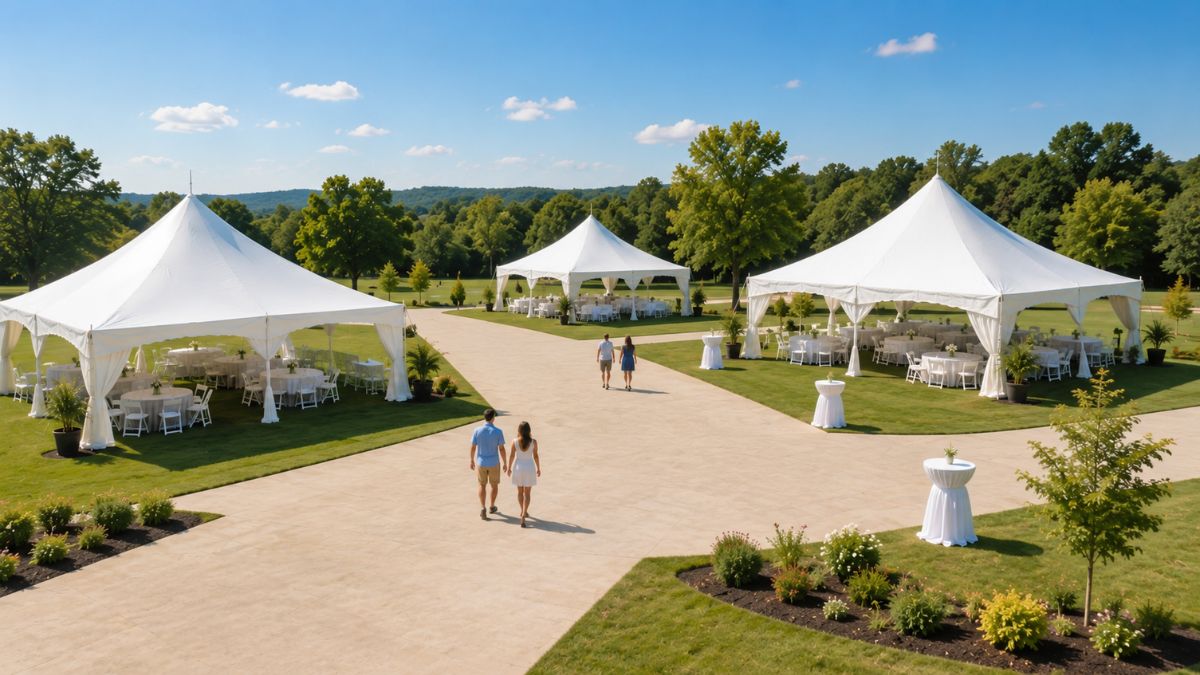
Well-planned pathways and tent positioning create natural guest movement
Start with Guest Movement Planning
Before you select a single tent or arrange any tables, map how guests will move through your venue. This is the foundation of effective crowd flow management.
Think like a first-time attendee arriving at your event:
Key Movement Questions
- Where will guests enter and exit? Single entry point or multiple access areas?
- Where are parking areas located? How far will guests walk?
- Will guests need to visit registration before entering? This creates an immediate bottleneck if poorly positioned.
- Where will food, entertainment, and restrooms be located? These are your natural crowd magnets.
- Which areas are likely to become the busiest? Plan extra space around these zones.
The goal is creating natural walking paths that encourage smooth movement without forcing guests through bottlenecks or dead ends.
For large public events with complex logistics, our guide on large event rental logistics explains additional planning considerations that simplify operations and improve guest experience.
Separate High-Traffic Areas
Some parts of every event naturally attract more visitors than others. Clustering these attractions together creates congestion. Spreading them throughout the venue encourages natural dispersal.
❌ What Creates Bottlenecks
- Food vendors next to beverage stations
- Registration table blocking the entrance
- Bounce houses clustered together
- Entertainment stage blocking restroom access
- All seating concentrated in one area
✓ What Encourages Flow
- Food on one side, inflatables on the other
- Registration off to the side, not in the path
- Activities spread across the venue
- Multiple water/beverage stations
- Seating zones distributed throughout
For example, placing inflatables on one side of the event while locating food service in another area encourages guest movement instead of creating one overcrowded section where families congregate.
If you're adding attractions for families, explore our selection of bounce houses and water slides that fit a variety of event sizes and age groups.
Create Wide, Clearly Defined Walkways
One of the most common layout mistakes: leaving too little room between tents, tables, or activity areas.
What feels adequate on a site plan becomes cramped when guests are carrying plates, pushing strollers, or walking in groups.
💡 Walkway Best Practices
- Keep primary walkways wide enough for two-way foot traffic — at least 6–8 feet for major pathways
- Leave extra space near entrances — this is where guests pause to orient themselves
- Avoid placing décor or equipment in walking paths — what looks decorative becomes an obstacle
- Allow room for wheelchairs, strollers, and service vehicles when necessary
- Mark primary routes visually — even subtle cues like tent positioning guide movement
Well-designed pathways improve both guest comfort and overall event safety. Wide walkways also simplify vendor access, equipment delivery, and emergency response if needed.
Position Seating Throughout the Venue
Not every guest wants to stand throughout the event. Creating several seating zones allows people to take breaks, eat comfortably, watch entertainment, and socialize without blocking walkways.
Instead of concentrating all seating in one location, distribute tables around the venue to reduce congestion:
🍴 Near Food Service
Primary dining area with enough tables for peak meal times. Don't make guests carry plates across the venue.
🎵 Near Entertainment
Viewing area where guests can watch performances without standing. Mix table seating with open space.
🌳 Shaded Rest Areas
Quieter zones away from high-traffic areas where older guests or parents with young children can take breaks.
Our article on smart seating layouts for community gatherings offers additional ideas for arranging tables that improve traffic flow during larger events.
You'll also find a variety of event seating and table rental options that can be configured to match your guest count and available space.
Use Tents to Organize the Space
Tents do much more than provide shelter from the weather. They help define different functional areas and naturally guide guests through the venue.
Dining Tent
Creates a defined eating area that keeps food service organized and protects guests from sun or light rain.
Registration Tent
Positions check-in near the entrance without blocking the main pathway into the event.
Vendor Booth Tents
Establishes a marketplace area that guests can browse without disrupting other activities.
VIP / Sponsor Tent
Creates a premium area that feels special without isolating guests from the main event.
Information Station
Provides a visible hub where guests can ask questions or pick up programs without wandering.
Entertainment Cover
Protects equipment and performers while creating a focal point for the performance area.
Strategically positioned tents make navigation easier and create visual organization that guests understand intuitively.
If you're still deciding how much covered space you'll need, our guide on finding the right tent size for your guest count can help you estimate the best option for your event.
Think About Comfort During Warm June Events
June events in Northeastern Pennsylvania often bring pleasant weather—but they can also bring heat. Simple additions can make guests much more comfortable throughout the day.
⚠️ Comfort Essentials for Warm Weather Events
- Shaded seating — position tents or use natural shade from trees
- Covered dining areas — guests won't enjoy food in direct sunlight
- Water stations — multiple locations encourage hydration
- Fans where appropriate — inside tents or near food service
- Rest areas for older guests — quieter zones with comfortable seating
Keeping guests comfortable encourages them to stay longer and enjoy more of the event. It also reduces complaints and improves overall satisfaction.
Plan for Emergencies Without Creating Obstacles
Safety should always be part of your layout strategy. Good crowd flow isn't just about convenience—it's an important part of responsible event planning.
🚨 Maintain Clear Access For
- Emergency personnel — ambulances and fire vehicles need direct access
- Delivery vehicles — food trucks, equipment delivery, waste removal
- Event staff — coordinators need to move quickly between areas
- Equipment transport — setup and teardown require clear pathways
Emergency exits should remain visible and unobstructed throughout the event. If you're using tents, ensure at least two clear exit routes from every covered area.
Don't let decorations, signage, or equipment block these critical pathways—even temporarily.
Keep Vendors and Entertainment Accessible
Food trucks, concession stands, DJs, and activity stations all attract crowds. Rather than clustering everything together, spread these attractions across the venue to encourage steady guest movement.
This approach also reduces long lines and helps vendors serve guests more efficiently.
🍔 Food Service Positioning
Place food vendors where:
- Lines won't block main pathways
- Guests can queue without crowding other areas
- Seating is nearby but not directly adjacent
- Delivery vehicles can access without disrupting guests
🎤 Entertainment Staging
Position stages or performance areas where:
- Sound won't overwhelm quiet zones
- Crowds can gather without blocking access
- Performers have backstage space
- Equipment can be loaded in/out easily
Review the Layout Before Event Day
Walk through your event plan from a guest's perspective. Making small layout adjustments before setup day often prevents major problems once guests arrive.
✅ Pre-Event Layout Checklist
- Can guests easily find important areas?
- Are there places where lines might block walkways?
- Is there enough seating for peak times?
- Will guests naturally move through the venue?
- Is every activity easy to access?
- Are emergency routes clear?
- Do vendors have adequate space?
- Are restrooms accessible from all areas?
Consider doing a physical walk-through of the venue if possible, or at minimum sketch the layout to scale so you can identify potential issues.
For more practical planning ideas, browse our Event Rentals planning resources, where you'll find additional guides covering layouts, logistics, seasonal planning, and event organization.
Frequently Asked Questions
How can I improve crowd flow at my outdoor event? +
Start by planning guest movement before selecting equipment. Identify entry and exit points, separate high-traffic areas like food and entertainment, create wide walkways for two-way foot traffic, and distribute seating throughout the venue. Use tents to define functional areas and guide natural movement patterns.
What are the biggest crowd flow mistakes at outdoor events? +
The most common mistakes include clustering all attractions together, leaving insufficient walkway space, concentrating all seating in one area, placing décor in walking paths, and failing to account for wheelchair and stroller access. These issues create bottlenecks and reduce guest comfort.
How much space should I leave for event walkways? +
Primary walkways should be wide enough for two-way foot traffic—at least 6 to 8 feet for major pathways. Leave extra space near entrances and exits where guests pause to orient themselves. Ensure pathways accommodate wheelchairs, strollers, and service vehicles when necessary. Avoid placing equipment or décor in designated walking paths.
Where should I position food and entertainment at large events? +
Spread high-traffic attractions throughout the venue rather than clustering them together. Place food vendors in one area, inflatables in another, and entertainment stages elsewhere. This encourages guest movement and prevents one section from becoming overcrowded. Position attractions so queues don't block main pathways.
How can tents improve event organization? +
Tents define functional areas including dining, registration, vendor booths, VIP seating, and information stations. Strategically positioned tents guide guests through the venue, make navigation easier, and provide shelter while organizing the event layout naturally. They create visual cues that help guests understand the event flow intuitively.
Let CSE Services Help You Build a Better Event
Successful outdoor events don't happen by accident. Careful guest movement planning, thoughtful layouts, quality rental equipment, and reliable service all work together to create an enjoyable experience for every attendee.
Whether you're planning a community festival, corporate gathering, school function, wedding, or graduation celebration in Northeastern Pennsylvania, CSE Services provides tents, tables, seating, inflatables, and complete rental solutions to help your event run smoothly from start to finish.
Book Online Now!No pressure, no pitch — just practical help planning your event