

Table and Seating Layouts for Formal Gatherings
Imagine guests entering your formal dinner or awards ceremony. They should immediately identify where they belong, sit comfortably throughout the program, see the main presentation area without straining, and move around without awkward interruptions. The seating arrangement shapes both the first impression and the actual experience.
Formal seating layouts influence the atmosphere and function of a gathering in ways that go far beyond simply placing enough chairs in a room. The best arrangement depends on your guest count, venue dimensions, event program, and service style—and choosing the furniture is only the beginning. Placement, orientation, and thoughtful spacing matter just as much.
This guide compares practical layouts, explains how to refine your arrangement, and helps you create a polished setting that works beautifully for your guests.
Quick Navigation
- What Makes a Seating Layout Work?
- Five Formal Seating Layouts and When to Use Them
- Match the Table Arrangement to Your Event Program
- Plan for Clear Views and Comfortable Movement
- Make Formal Seating Look Polished
- How to Estimate Tables and Chairs
- Common Seating Mistakes to Avoid
- Formal Event Seating Checklist
Which Type of Event Are You Planning?
Formal Dinner or Gala
You need elegant seating that encourages conversation during a seated meal, with clear sightlines to speakers or presentations. Focus on round tables or banquet rows.
Awards or Recognition Ceremony
Your guests need to see the stage clearly without dining tables in the way. Theater-style or U-shaped seating puts the focus where it belongs.
Fundraiser With Multiple Activities
You're combining dining, networking, and presentations in one space. Mixed seating with round tables and high-top cocktail tables gives you flexibility.
What Makes a Seating Layout Work for a Formal Event?
A purposeful formal arrangement does more than fit enough chairs in a room. It creates a setting where guests feel comfortable, the program flows smoothly, and the space looks intentional. Five considerations determine whether your layout actually works.
Guest Comfort
Adequate personal space, suitable chairs, easy access to seats, and thoughtful consideration of how long guests will be seated. Cramped arrangements create discomfort no matter how beautiful the room looks.
Visual Consistency
Coordinated furniture, table covers in consistent colors, and a deliberate layout that supports the desired level of formality. Random furniture placement looks accidental, not elegant.
Conversation
Seating arrangements should suit whether guests will socialize in small groups, dine together at long tables, or focus on a shared activity like a speech or ceremony.
Presentation Visibility
Guests should have practical sightlines to speakers, screens, performances, or a head table without regularly turning around or standing up.
Movement
Staff, guests, and vendors need sufficient space to navigate without regularly disturbing seated attendees. Consider routes to entrances, exits, restrooms, and service areas.
A formal layout must serve both the appearance of the event and the people attending it. When those two priorities align, the arrangement feels effortless.
Five Formal Seating Layouts and When to Use Them
The event format determines which layout makes sense. A seated dinner requires different furniture decisions than an awards ceremony or a fundraiser with multiple activities. Start with what guests will actually do, not what looks impressive.
Round-Table Seating for Conversation and Formal Dining
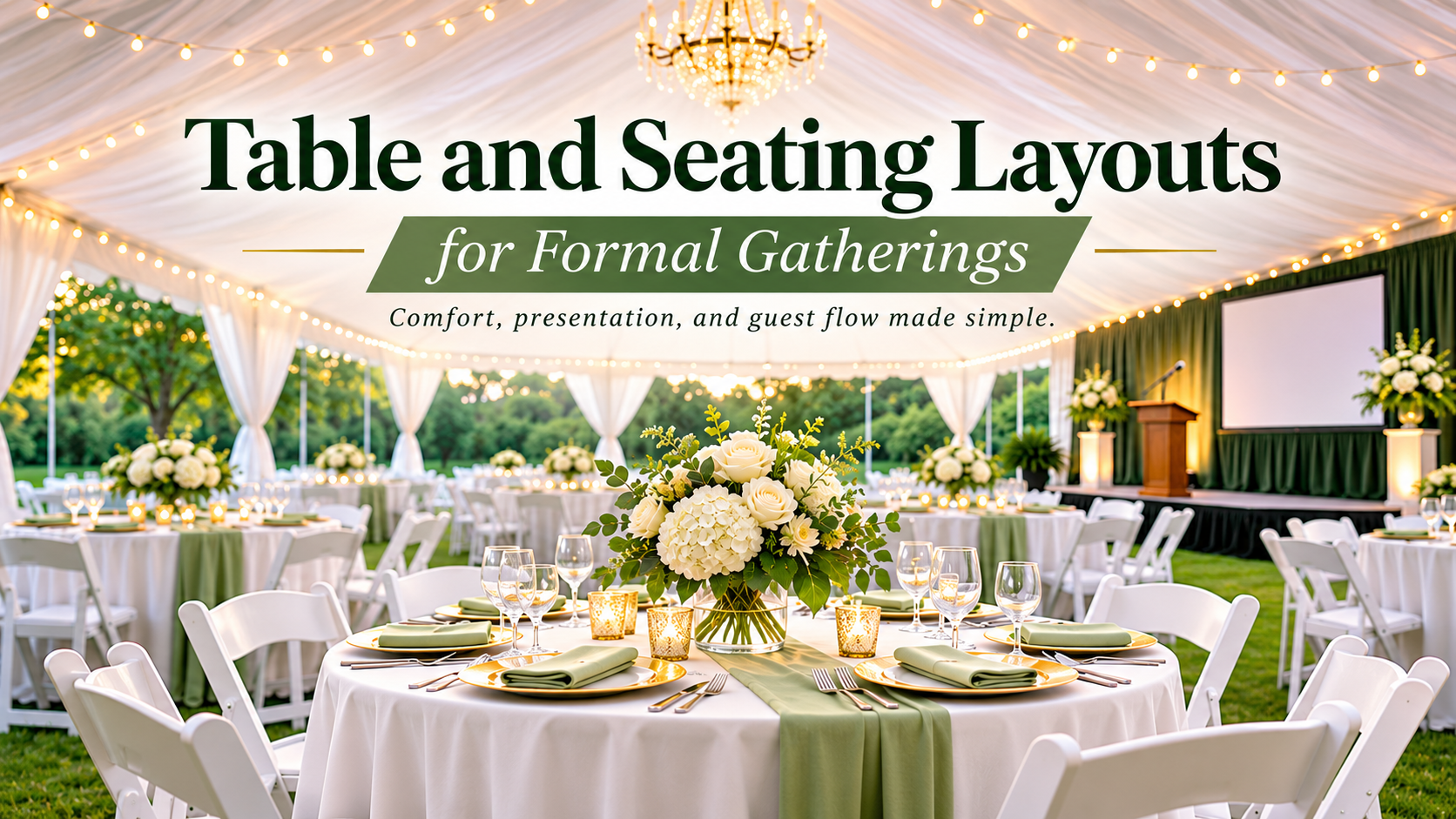
Separate round tables encourage conversation within small groups and support seated dinners, galas, and receptions beautifully. Everyone faces inward, making it easy to include the entire table in the discussion. This arrangement works best when guest interaction matters as much as the program.
Round tables create natural visual balance when arranged symmetrically, but they require thoughtful positioning so everyone can still see the presentation area. Consider orienting tables so at least half the guests at each table don't need to turn around during speeches.
Suitable for: Gala dinners, banquets, donor appreciation events, wedding receptions, and formal meals where conversation is central.
Banquet-Style Seating for Structured Meals
Rectangular tables can be arranged in rows or longer configurations, creating organized group seating with a shared dining experience. Banquet rows work particularly well in rectangular venues and when everyone should face the same direction.
This layout makes efficient use of space, creates clear walking routes between rows, and naturally orients guests toward a presentation area at one end of the room. Conversation tends to concentrate among nearby guests rather than the entire table, which suits some formal occasions better than others.
Suitable for: Recognition dinners, formal community meals, corporate banquets, and structured group dining with a central presentation.
Theater-Style Seating for Speeches and Ceremonies
Theater-style arranges chairs in audience-facing rows without dining tables, putting complete focus on the speaker, stage, or presentation area. This layout maximizes seating capacity and ensures everyone has a clear view forward.
Theater seating works beautifully for ceremonies, awards presentations, and speaker programs where guests won't be eating a full meal. It allows for organized entry and exit through center and side aisles, and it's easy to adapt the layout to different room shapes.
The main limitation: it's not practical for full meal service. Consider theater-style when the program is more important than dining.
Suitable for: Awards presentations, formal ceremonies, speaker programs, and recognition events without seated meals.
U-Shaped Seating for Smaller, Discussion-Focused Gatherings
Tables arranged in a U shape support inward-facing discussion or a clearly defined presentation area at the open end. Everyone can see each other and the presenter, making this ideal for smaller formal meetings where interaction matters.
U-shaped seating creates excellent visibility across the group and makes it easy for a speaker or facilitator to move around the open center. The arrangement works well for 20–40 guests but becomes impractical for larger events due to space limitations.
Suitable for: Executive dinners, committee meetings, board retreats, and formal discussion sessions.
Mixed Seating for Events With Multiple Activities
Dining tables, high-top cocktail tables, and audience seating can support different activities within one event—reception and mingling, seated dinner, and presentation or program. Mixed layouts give you flexibility but require more detailed planning.
The key is creating clear distinctions between activity areas so guests understand where to sit for dinner versus where to stand and socialize. Maintain a consistent visual style across all furniture to prevent the room from looking disjointed.
Suitable for: Charity fundraisers, donor receptions, gala dinners with presentations, and events that transition between mingling and seated activities.
| Layout | Best For | Main Advantage | Main Trade-Off |
|---|---|---|---|
| Round Tables | Formal dinners and galas | Group conversation | Requires thoughtful sightlines and circulation |
| Banquet Rows | Structured group dining | Organized, adaptable table placement | Conversation concentrated among nearby guests |
| Theater-Style | Speeches and ceremonies | Shared focus on the front | Unsuitable for full seated meals |
| U-Shaped | Smaller formal meetings | Interactive group discussion | Less practical for large guest counts |
| Mixed Layout | Multi-activity gatherings | Supports different event phases | More detailed planning required |
Match the Table Arrangement to Your Event Program
The best seating configuration follows directly from what guests will do during the event. Make furniture decisions based on the program, not what looks most impressive in photos.
Formal Dinners and Banquets
Balance social interaction, food service, and access to the main presentation area. Round tables encourage conversation during the meal, while banquet rows create a more unified focus if the program includes extended speeches or awards. Both can work—the difference is whether conversation or presentation takes priority.
Awards and Recognition Ceremonies
Prioritize speaker sightlines, audience orientation, and guest-of-honor placement. Theater-style seating puts complete focus on the stage, while U-shaped or banquet arrangements work if the ceremony includes a seated meal. Plan efficient transitions between seating and the presentation area so honorees don't navigate an obstacle course.
Fundraising Galas and Donor Gatherings
Consider sponsor tables, donation activities, auctions, speeches, and social networking. Mixed seating with round tables for dining and high-top cocktail tables for mingling creates natural activity zones. Keep the arrangement flexible enough to accommodate program changes without major furniture adjustments.
Wedding-Related Formal Gatherings
Focus on head-table visibility, conversation areas, and comfortable movement between dining and dancing. Round tables work beautifully for rehearsal dinners and receptions where guests know each other. Position the head table where it's visible from every seat without blocking the dance floor or presentation area.
💡 Pro Tip
Consider two events with 80 guests each. Event A is a recognition dinner with one central speaker—theater-style or banquet rows facing forward make sense. Event B is a charity fundraiser combining dining, networking, and a short presentation—mixed seating with round tables and cocktail areas creates flexibility. Same guest count, completely different furniture needs.
Plan Seating for Clear Views and Comfortable Guest Movement
An attractive floor plan on paper can still create frustration if guests can't see the presentation or navigate the room comfortably. Evaluate the layout with chairs occupied, not just when furniture is neatly pushed in.
Presentation Visibility
Position furniture so guests can see the principal activity without regularly turning or standing. Consider the stage or podium location, speaker position, and potential obstructions like centerpieces or columns.
Orient dining tables thoughtfully—guests seated with their backs to the presentation shouldn't have to turn around for the entire program. If you're using screens or projections, verify visibility from every seat.
Circulation
Plan routes to guest entrances and exits, food and beverage service areas, restrooms, presentation areas, dance floors, and reception spaces. Staff and vendors need clear paths that don't require squeezing between occupied chairs.
Mark primary walking routes on your floor plan and confirm they remain clear when chairs are pulled back and guests are seated.
Accessibility
Include accessible seating options and routes for guests who use wheelchairs or other mobility aids. Coordinate with your venue or qualified professionals to ensure appropriate clearances and access.
Don't guess at code requirements—verify accessibility standards with someone who knows the specific regulations that apply to your venue and event.
Make Formal Seating Look Polished Without Overcomplicating the Setup
An elegant seating arrangement doesn't require elaborate furniture or expensive decorations. Visual cohesion and thoughtful presentation create a polished atmosphere more effectively than complicated setups.
Choose Chairs That Match the Occasion
Chair style and condition affect the overall impression immediately. Standard folding chairs work fine for many gatherings, but white garden chairs or coordinated seating create a more refined appearance for formal occasions.
The difference isn't luxury—it's intentionality. Matching chair styles signal that the event was planned carefully.
Coordinate Table Shapes and Covers
Table covers create visual consistency across a room, particularly when you're mixing round tables and banquet tables. Consistent colors and finishes make a simple arrangement appear intentional rather than improvised.
Consider fitted table covers that reach the floor for a more polished look, especially for head tables or display areas guests will see from multiple angles.
Use Special Tables Selectively
A sweetheart table, guest-of-honor table, or high-top cocktail table can serve specific event purposes without overcomplicating the layout. Not every formal event requires a head table—use one when it supports the program, not because it's expected.
Keep Decorative Elements Functional
Centerpieces and table decorations should enhance the setting without interfering with guest conversation, table space, or presentation sightlines. Beautiful doesn't mean tall or elaborate—it means appropriate.
⚠️ Worth Noting
Coordinated furniture creates a polished atmosphere, but remember that table and chair delivery doesn't automatically include setup and arrangement. Confirm whether placement is included in your rental or requires an additional charge so you can plan accordingly.
How to Estimate Tables and Chairs for a Formal Gathering
Getting furniture quantities right prevents both cramped seating and wasted expense. Follow a simple estimation process rather than guessing.
- Confirm the number of guests who require seats simultaneously. Not everyone needs to be seated at once if your event includes standing reception time.
- Choose the event's main seating configuration. Round tables, banquet rows, theater-style, or mixed seating.
- Review the appropriate capacity for each table. Standard 60-inch round tables typically seat 8 guests comfortably, while 8-foot banquet tables seat 8–10 depending on chair style.
- Calculate the preliminary number of tables. For 80 seated guests using 8 seats per round table: 80 ÷ 8 = 10 round tables.
- Check that the entire arrangement fits the actual usable venue space. This is a furniture-count example, not a guarantee that 10 occupied tables will fit inside a particular room.
- Add appropriate head-table, registration, service, or presentation furniture. These don't come out of your guest seating count.
- Confirm the final order against the floor plan and vendor requirements. Verify dimensions, delivery details, and setup responsibilities before finalizing.
Seating assumptions depend on chair type and actual table dimensions. Don't pack furniture tightly to maximize capacity—guests need comfortable personal space and room to move. When in doubt, choose comfort over squeezing in one more table.
For more detailed guidance on selecting appropriate furniture, review this guide on choosing the right tables and chairs for your event.
Common Formal Seating Mistakes and How to Avoid Them
Even experienced event organizers can overlook practical seating details. Here are five mistakes that show up repeatedly—and how to correct them before your event.
🚩 Prioritizing Appearance Over Comfort
A beautiful arrangement can still be uncomfortable if seating is cramped or access is difficult. Test your layout by sitting in different positions and confirming there's adequate space when chairs are occupied.
🚩 Blocking Views of the Main Presentation
Furniture should be oriented with the program in mind. If half your guests spend the evening turned around in their chairs, the layout needs adjustment.
🚩 Forgetting Room for Occupied Chairs
Include the space chairs need when pulled back and occupied. What looks spacious on an empty floor plan can feel cramped when 80 guests are seated.
🚩 Mixing Furniture Without a Clear Design Purpose
Visual consistency matters. If you're combining round and rectangular tables, make sure the mix serves the event rather than looking like you couldn't decide on one configuration.
🚩 Leaving the Final Seating Plan Until Delivery Day
Confirm quantities, layout responsibilities, and placement instructions ahead of time. Trying to arrange 15 tables and 120 chairs on event day creates unnecessary stress.
Formal Event Seating Checklist Before You Rent
Use this checklist to verify you've addressed the essential seating decisions before confirming your furniture order.
- ☐ Confirm the expected guest count
- ☐ Identify the main event activities
- ☐ Choose the primary seating layout
- ☐ Confirm available venue dimensions
- ☐ Check guest access and circulation routes
- ☐ Account for occupied chairs and service access
- ☐ Position guest-of-honor and presentation seating
- ☐ Select table shapes and chair styles
- ☐ Review table cover and presentation needs
- ☐ Confirm furniture quantities
- ☐ Verify rental delivery and setup responsibilities
- ☐ Review the final layout before the event
Find Tables and Chairs for Your Formal Gathering With CSE Services
CSE Services provides practical table and chair rental options for formal gatherings in Waymart and throughout Northeastern Pennsylvania. We focus on quality equipment, straightforward coordination, and helping you make cost-conscious rental decisions that support your event.
Browse rental options online, confirm requirements before your event, and work with a team that understands the details matter. No pressure, no pitch—just reliable service when you need it.
Frequently Asked Questions
What seating layout is best for a formal dinner? +
Round-table and banquet-style arrangements are the most common options for formal dinners. Round tables encourage conversation within small groups and create an elegant atmosphere, while banquet rows provide organized seating with clear orientation toward a presentation area. The ideal choice depends on your guest count, meal service style, conversation needs, and available room dimensions.
Are round or rectangular tables better for formal events? +
Neither is universally better—each serves different purposes. Round tables excel at facilitating group conversation and creating intimate dining experiences, making them ideal for galas and banquets where guest interaction matters. Rectangular tables work well for structured group dining, efficient use of rectangular venues, and events where everyone should face the same direction. Consider your event format, venue shape, and whether conversation or presentation focus is more important.
How should chairs be arranged for an awards ceremony? +
Theater-style seating works best for awards ceremonies—rows of chairs facing the stage without dining tables. Arrange chairs in straight rows with center and side aisles for easy entry and exit. Position guests of honor near the front with clear access to the presentation area. Ensure every seat has an unobstructed view of the podium, stage, or screen. Leave adequate space between rows so guests can sit comfortably without bumping the chairs behind them.
How do you make a formal event seating arrangement look elegant on a budget? +
Focus on coordinated furniture rather than expensive upgrades. Choose matching chair styles and table covers in consistent colors to create visual cohesion. Plan thoughtful spacing so the arrangement looks intentional rather than cramped. Prioritize furniture that supports your program—a few well-placed round tables with quality chairs often looks more polished than a room packed with mismatched seating. Invest in what guests interact with most: comfortable chairs and clean table covers.