
Heat-Smart Event Planning for Guest Comfort
You've found the perfect venue for your summer wedding, festival, or corporate picnic. The weather forecast looks sunny. But when July temperatures climb into the 80s and 90s across Northeastern Pennsylvania, even the most beautiful outdoor setting can become uncomfortable without the right planning.
Guest comfort isn't a luxury detail—it's what separates a memorable celebration from an event people leave early. When guests spend the afternoon shifting between patches of shade, hunting for water, or standing in crowded walkways without airflow, they remember the discomfort more than the occasion.
This guide walks through the practical decisions that keep guests cool, comfortable, and engaged throughout your outdoor event—from strategic shade placement to logistics that prevent heat-related problems before they start.
On This Page
- Which Type of Event Are You Planning?
- Start with Shade as a Priority
- Plan Your Hot Weather Logistics Early
- Keep Guests Moving Comfortably
- Create Comfortable Seating Areas
- Choose Rentals That Improve Comfort
- Think About the Guest Experience from Start to Finish
- Schedule Activities Around Summer Temperatures
- Don't Forget Staff and Vendors
- Common Questions About Summer Event Comfort
Which Type of Event Are You Planning?
Different events face different comfort challenges. Here's how your event type affects your summer planning approach:
Weddings & Private Celebrations
Your priority: Creating a comfortable, elegant atmosphere that lasts 4-6 hours.
Key needs: Shaded ceremony space, covered dining area, comfortable seating with airflow, dance floor protection from afternoon sun.
Focus on: Guest experience from arrival through dancing—every moment matters when it's a once-in-a-lifetime event.
Corporate & Community Events
Your priority: Managing larger crowds (100-500+) safely while maintaining professionalism.
Key needs: Multiple shaded zones, wide walkways, accessible rest areas, vendor staging, visible signage.
Focus on: Logistics that prevent bottlenecks, heat issues, and accessibility problems at scale.
Festivals & Multi-Day Gatherings
Your priority: Creating zones where guests can move between sun and shade throughout the day.
Key needs: Distributed shade structures, cooling stations, clear layout design, emergency access, vendor weather protection.
Focus on: Flexibility that adapts to shifting weather and guest flow patterns over hours or days.
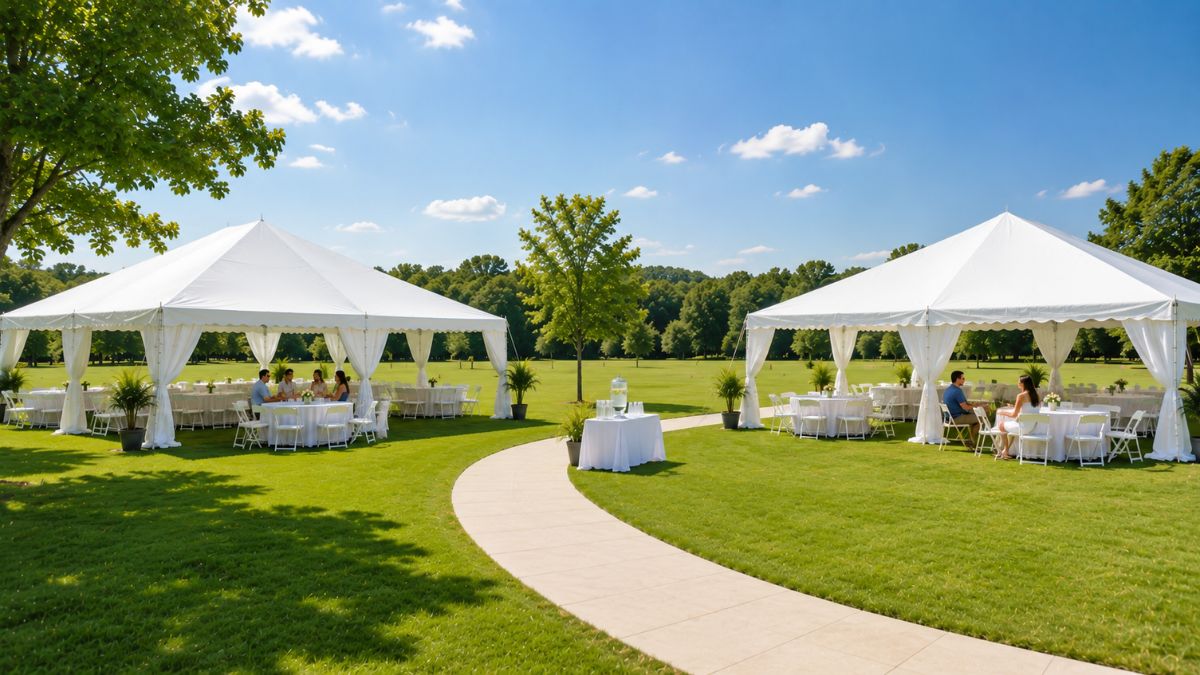
Strategic shade placement and comfortable seating areas keep outdoor events enjoyable throughout the day.
Start with Shade as a Priority
The single most effective way to improve guest comfort at summer events is distributing shade throughout your venue—not concentrating everyone beneath a single tent.
When guests have multiple shaded areas to choose from, they spread out naturally, reducing overcrowding and improving airflow. This makes the entire event feel more comfortable, even when temperatures climb.
Where to Position Shaded Areas
Essential shaded zones for any summer event:
- Dining areas — guests spend 45-90 minutes here
- Registration or check-in — where guests arrive and wait
- Seating clusters — places to rest between activities
- Food and beverage stations — high-traffic zones that need ventilation
- Entertainment viewing — ceremony sites, stages, activity zones
- Vendor booths — especially food prep and merchandise areas
💡 Pro Tip: Map the Sun's Path
Walk your venue at the same time your event will occur. Notice which areas are in full sun during peak afternoon hours (2-5 PM). Those spots need the most shade coverage—not just the areas that look nice in the morning.
For detailed strategies on positioning tents to maximize shade and improve guest movement, read our guide to placing tents for better shade and guest flow.
Plan Your Hot Weather Logistics Early
Summer events need different logistical planning than spring or fall gatherings. Decisions you make weeks before the event directly affect guest comfort on the day.
Critical Hot Weather Logistics
✓ What Keeps Events Comfortable
- Water stations every 50-75 feet in high-traffic areas
- Shaded rest areas away from activity zones
- Vendor staging areas with access to power and water
- Wide walkways (minimum 6 feet) for airflow
- Equipment delivered early morning to avoid midday heat
- Clear emergency vehicle access routes
- Electrical capacity for fans, misters, or lighting
✗ What Creates Problems
- Single water station for 100+ guests
- No designated rest areas—guests stand all day
- Vendors setting up during peak afternoon heat
- Narrow paths that trap heat and crowd guests
- Equipment arriving during guest arrival times
- Emergency access blocked by parked vehicles or equipment
- Insufficient power causing fan or lighting failures
⚠️ Timing Matters:
Schedule delivery and setup for early morning (before 10 AM) when temperatures are cooler. This protects setup crews from heat stress and ensures equipment is ready before guests arrive. Late deliveries during peak heat hours create safety risks and rushed installations.
Keep Guests Moving Comfortably
Crowded, narrow walkways feel even more uncomfortable during hot weather. When guests are packed shoulder-to-shoulder without airflow, heat becomes a problem quickly—even in shaded areas.
Thoughtful layout design encourages guests to explore your entire venue while reducing congestion at popular areas like food stations, restrooms, or seating zones.
Designing Better Guest Movement
Wide Walking Paths
Minimum 6 feet wide for main pathways. 8-10 feet for high-traffic routes between parking, dining, and entertainment. Wider paths improve airflow and reduce heat buildup.
Clear Entrances and Exits
Mark entry and exit points with signage or tent placement. Guests should immediately see where to go upon arrival—not wander in the sun searching for registration.
Separate Food and Activity Zones
Don't position food service next to high-traffic entertainment areas. Separate zones reduce crowding and give guests space to eat comfortably without being jostled.
Accessible Routes
Ensure guests with mobility needs, strollers, or wheelchairs can navigate easily. Accessible paths also improve flow for everyone—fewer bottlenecks, better circulation.
For more strategies on designing layouts that prevent congestion and improve guest comfort, explore our guide to managing crowd flow at outdoor events.
Create Comfortable Seating Areas
Guests appreciate opportunities to sit and rest throughout the day, especially during July and August when temperatures peak in the afternoon. Comfortable seating isn't just about having enough chairs—it's about where you place them.
What Makes Seating Comfortable in Summer
- Shaded throughout the afternoon — not just at setup time
- Positioned for airflow — avoid tight clusters that trap heat
- Located near refreshments — guests shouldn't trek across the venue for water
- Clear views of entertainment — ceremony sites, stages, or activity areas
- Accommodate families and older guests — some guests need to sit more frequently
- Mix of seating types — tables for dining, open chairs for relaxing, benches for quick rests
💡 Pro Tip: Create Seating Zones
Instead of one large seating area, create 3-4 smaller clusters throughout your venue. This gives guests options—some prefer quieter spots away from activity, while others want to be near the action. Multiple zones also reduce crowding.
Browse our tables and chairs for outdoor gatherings to find seating options that fit your event size and layout needs.
Choose Rentals That Improve Guest Comfort
Not every rental item is decorative. Many rental products actively improve the guest experience during summer events—providing shade, keeping drinks cold, creating comfortable gathering spaces, and preventing heat-related issues.
Rentals That Make a Measurable Difference
Large Shade Tents
The foundation of summer event comfort. Choose sizes that cover more area than you think you need—guests naturally gravitate toward shade, and overcrowding defeats the purpose.
Beverage Stations
Dedicated tables or stands for water, lemonade, and cold drinks. Position multiple stations throughout the venue—not just near food service. Hydration access prevents heat issues before they start.
Covered Dining Areas
Guests spend 45-90 minutes eating at seated events. Dining under full sun turns meals into endurance tests. Covered dining is non-negotiable for summer comfort.
Comfortable Seating
Chairs with backs and cushioning, not just basic folding chairs. Guests stay longer and enjoy the event more when seating doesn't add to their discomfort.
Designated Rest Spaces
Quiet, shaded areas with seating away from high-traffic zones. Families with young children, elderly guests, and anyone needing a break appreciate having somewhere to retreat without leaving the event.
Lighting for Evening Events
If your event extends into evening, lighting transforms comfort. Guests stay later when they can see clearly and don't feel like they're stumbling in the dark.
⚠️ Book Early for Peak Season:
Summer weekends (especially June through August) book 4-6 weeks in advance across Northeastern Pennsylvania. Popular equipment like large tents and quality seating goes first. Waiting until two weeks before your event limits your options significantly.
Browse our selection of white party tents for reliable shelter in a variety of sizes, suitable for weddings, festivals, corporate events, and community celebrations.
Think About the Guest Experience from Start to Finish
Great event planning considers every stage of the guest journey—not just the main activities. From the moment guests park their cars to when they leave hours later, each touchpoint affects their comfort and overall impression.
Walk Through Your Event Like a Guest
Arrival
Ask yourself:
- Is parking clearly marked and convenient?
- Will guests immediately find shade after arriving?
- Is the registration or welcome area visible and accessible?
- Can they quickly orient themselves to the venue layout?
During the Event
Ask yourself:
- Are restrooms easy to locate and access?
- Is there adequate seating in multiple locations?
- Can guests move easily between activities without crowding?
- Are refreshments easily accessible throughout the venue?
Departure
Ask yourself:
- Are exit paths clearly marked?
- Can guests leave without fighting through crowds?
- Is the parking exit organized to prevent traffic jams?
- Did they feel comfortable throughout—or relieved to leave?
Small improvements throughout the venue often have a much bigger impact than one major feature. Guests remember feeling comfortable and welcomed—or they remember feeling hot, crowded, and confused.
Schedule Activities Around Summer Temperatures
If your event schedule is flexible, organizing activities around the hottest part of the day improves comfort without increasing your rental budget.
Across Northeastern Pennsylvania, peak heat typically occurs between 2:00 PM and 5:00 PM during July and August. Scheduling high-energy activities during cooler morning or evening hours makes a noticeable difference.
Heat-Smart Activity Scheduling
Morning (Before 12 PM)
Best for: Active games, sports tournaments, setup activities, outdoor ceremonies, vendor setup, kids' activities, photo sessions.
Afternoon (2-5 PM)
Avoid or keep shaded: This is peak heat. Schedule seated activities beneath tents, serve meals in covered areas, or plan light entertainment that doesn't require physical exertion.
Evening (After 6 PM)
Best for: Dancing, live music, fireworks, social mingling, toasts and speeches, dessert service, outdoor movies, bonfire gatherings.
💡 Pro Tip: Build in Downtime
Schedule a 30-45 minute break during peak afternoon heat. Use this time for cocktail hour beneath tents, open seating with refreshments, or low-key entertainment like acoustic music. Guests appreciate the chance to rest and recharge before evening activities begin.
Don't Forget Staff and Vendors
Your event team, vendors, and volunteers spend more time outdoors than most guests—often working in direct sun during setup, service, and breakdown. Keeping staff comfortable leads to better service throughout the event.
Support Your Event Team
- Shaded break areas away from guest spaces where staff can rest between shifts
- Drinking water access for caterers, DJs, photographers, coordinators, and volunteers
- Convenient equipment access so vendors don't carry heavy items across the venue in full sun
- Clearly marked vendor parking near setup zones to reduce heat exposure during load-in
- Backup supplies like extra water, ice, and first aid kits accessible to staff
- Adequate power and lighting for vendor equipment so they're not troubleshooting issues in the heat
When your event team feels supported and comfortable, they provide better service, handle challenges more calmly, and create a more professional experience for guests.
Common Questions About Summer Event Comfort
How much shade do I need for an outdoor summer event?+
Plan for multiple shaded areas covering at least 60-70% of your event space. This includes dining areas, registration tables, rest zones, and food service locations. Distributing shade throughout the venue is more effective than concentrating everyone beneath a single large tent.
For a 100-guest event, consider 2-3 medium tents (20x20 or 20x30) positioned strategically rather than one oversized tent. Multiple shaded zones encourage guests to spread out, improving airflow and reducing overcrowding.
What logistics should I plan for hot weather events?+
Key hot weather logistics include water station placement (every 50-75 feet in high-traffic areas), guest rest areas away from activity zones, vendor access routes that don't require long walks in the sun, and equipment delivery timing scheduled for early morning before temperatures peak.
Also plan for electrical capacity to run fans or misters, emergency vehicle access that remains clear throughout the event, and backup supplies like extra water, ice, and first aid kits. Address these details 2-3 weeks before your event to avoid last-minute scrambling.
How do I keep guests comfortable at outdoor summer events?+
Provide ample shade, comfortable seating in ventilated areas, wide walkways for airflow (minimum 6 feet), accessible water stations, and schedule active portions during cooler morning or evening hours. Create multiple shaded rest areas throughout your venue so guests can escape the sun without leaving the event entirely.
Thoughtful layout design matters as much as equipment. Separate food and activity zones to reduce crowding, position seating near refreshments, and ensure restrooms are easy to locate. Small improvements throughout the venue often have a bigger impact than one major feature.
When should I book event rentals for summer gatherings?+
Reserve tents, tables, and chairs 4-6 weeks in advance during peak summer months (June through August) across Northeastern Pennsylvania. Popular weekends book even earlier—especially around holidays like July 4th and Labor Day.
Early reservations ensure better equipment availability, preferred delivery times, and more flexibility with your event layout. Waiting until two weeks before your event significantly limits your options, particularly for large tents and quality seating.
What's the best way to design crowd flow for outdoor events?+
Create wide walking paths (at least 6 feet, 8-10 feet for main routes), clearly mark entrances and exits with signage or tent placement, separate food and activity zones to prevent bottlenecks, and design accessible routes for guests with mobility needs, strollers, or wheelchairs.
Avoid positioning high-traffic areas (food stations, restrooms, registration) too close together. Guests should be able to move between zones without fighting through crowds. Good crowd flow improves both comfort and safety—especially important when temperatures are high and people need space for airflow.
Keep Guests Comfortable with CSE Services
Thoughtful summer event comfort planning creates memorable experiences for guests while helping your event run more efficiently. By preparing for hot weather logistics, incorporating practical shaded rentals, and focusing on the overall guest experience, you'll create an event that's enjoyable from beginning to end.
Whether you're organizing a wedding, graduation party, festival, corporate picnic, school event, or community celebration across Northeastern Pennsylvania, CSE Services offers high-quality tents, tables, chairs, and event rental solutions designed to simplify planning and improve guest comfort.
No pressure, no pitch—just practical support for your next outdoor celebration.
For more ideas on outdoor event planning, logistics, and seasonal strategies, visit our Event Rentals planning library or contact our experienced event rental team to discuss your specific needs.