
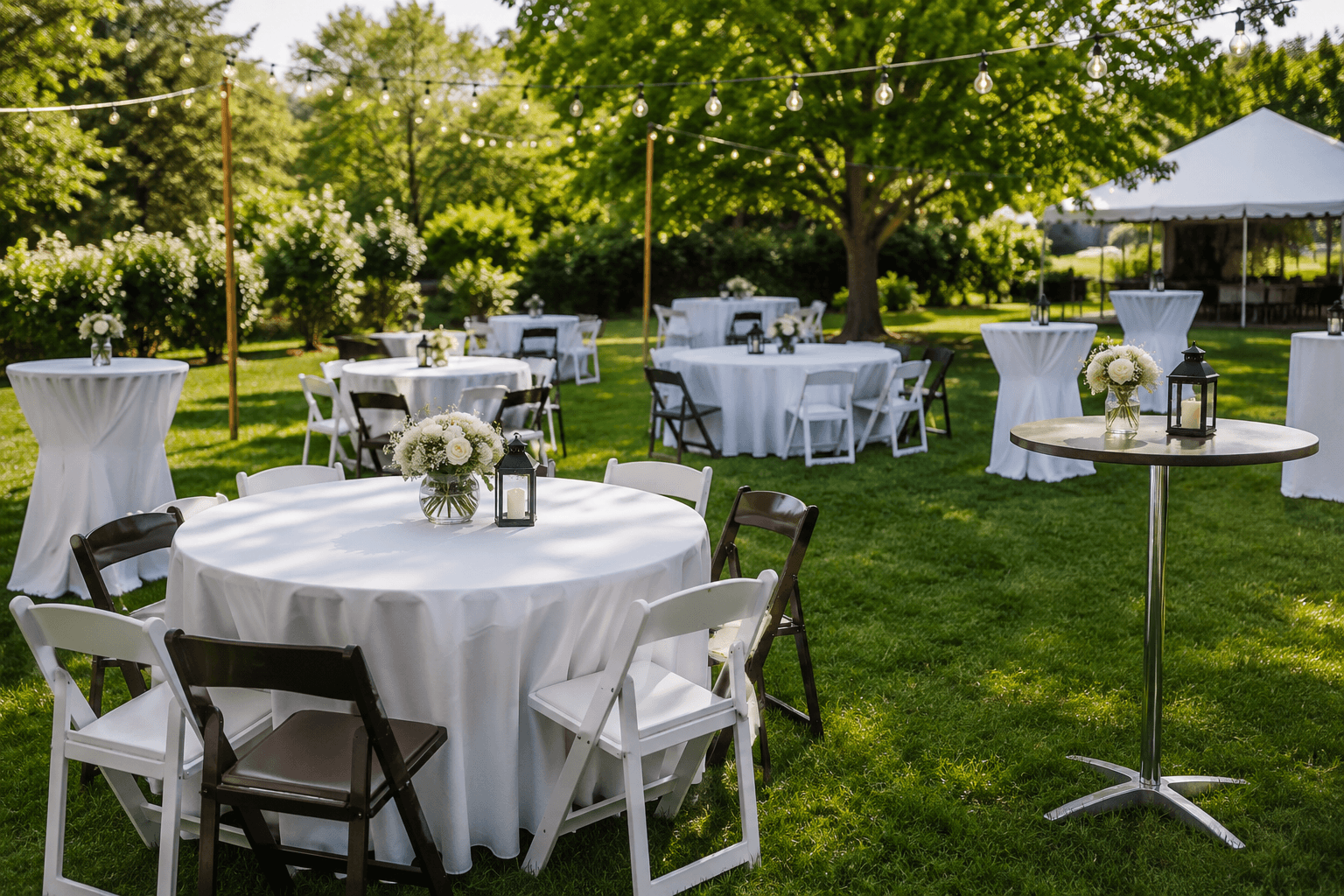
Table Layout Planning for Outdoor Spring Gatherings
Outdoor spring events often look simple at first glance: set up some tables, add chairs, and guests will naturally settle in. But once people begin arriving, poorly planned layouts can quickly create crowded walkways, awkward seating areas, and bottlenecks around food stations or entrances.
That’s why many event organizers search for guidance on outdoor table layout planning, event table spacing, and guest flow planning before hosting larger gatherings. Whether the event is a family celebration, fundraiser, corporate picnic, graduation party, or outdoor reception, table placement affects far more than appearance alone.
A thoughtful layout can improve comfort, movement, conversation, accessibility, and the overall experience for guests. By the end of this guide, you’ll better understand how outdoor seating layouts are typically planned, what spacing considerations matter most, and how professionals approach guest flow in outdoor event settings.
How Do You Plan Table Layouts for Outdoor Events?
Outdoor table layout planning starts with understanding how people will move throughout the event space.
Many organizers initially focus on fitting the maximum number of tables into a location. However, crowd movement, visibility, and accessibility often matter just as much as seating capacity.
A practical layout usually accounts for:
- Walking paths between tables
- Access to food and beverage stations
- Entry and exit points
- Open areas for gathering
- Visibility between guests and activity zones
- Space for servers, equipment, or entertainment
Outdoor layouts also differ from indoor seating plans because weather, uneven terrain, landscaping, and temporary structures all influence spacing decisions.
For readers comparing seating arrangements and event furniture options, this guide on how to choose the right tables and chairs for your event offers additional insight into common event setup considerations.
What Is the Best Spacing Between Tables at an Outdoor Event?
One of the most common questions related to event table spacing is how much room guests actually need to move comfortably.
Spacing depends heavily on the event type and how the space will be used.
- Formal dining events typically require wider spacing for seated service.
- Casual gatherings may allow tighter arrangements.
- Buffet-style events often need larger walking lanes near food stations.
- Events with children or older guests may require more accessible pathways.
Tables that are placed too closely together can create congestion and make seating uncomfortable. On the other hand, layouts with excessive spacing may leave the event feeling disconnected or difficult to navigate.
Professionals usually balance three goals at the same time:
- Comfortable seating
- Efficient guest movement
- Clear visual organization
Outdoor spring seating layouts also need flexibility because guest behavior changes naturally throughout the event. People gather in groups, move between activities, and often shift toward shaded or social areas over time.
How Does Guest Flow Planning Affect Outdoor Seating?
Guest flow planning refers to how people naturally move throughout an event space.
This concept becomes especially important during outdoor gatherings where there are fewer physical boundaries directing movement.
Poor guest flow can lead to:
- Congested walkways
- Long lines near food or beverage areas
- Difficult access to seating
- Guests clustering in certain sections
- Underused seating areas
A well-planned layout typically creates intuitive movement without guests needing instructions.
Food and Beverage Stations
Buffets, bars, dessert tables, and beverage stations usually generate the highest foot traffic. These areas often require wider spacing and clear approach paths.
Entrances and Registration Areas
Guests entering the event should be able to move naturally into the seating space without creating bottlenecks.
Entertainment and Gathering Zones
Dance floors, stages, games, and presentation areas often draw standing crowds that affect nearby seating arrangements.
Shade and Weather Protection
Guests naturally gravitate toward shaded seating during warmer spring afternoons. Layouts that ignore sun exposure may lead to uneven table usage throughout the event.
For additional educational resources related to seating arrangements and event setup ideas, readers can explore the broader tables and chairs planning category.
What Types of Tables Work Best for Spring Outdoor Seating?
Different table styles support different event goals.
Round tables are often used for conversation-focused gatherings because they encourage interaction between guests. Rectangular banquet tables may work better for family-style seating, buffet events, or larger group arrangements.
Cocktail tables are commonly used near gathering spaces where guests are expected to stand and socialize rather than remain seated for extended periods.
Outdoor conditions also influence table selection. Grass surfaces, uneven terrain, and weather exposure can affect table stability and spacing requirements.
Those comparing common seating and furniture arrangements can also review the tables and chairs category to better understand how event layouts vary depending on seating style and guest usage.
How Do Professionals Approach Outdoor Seating Layouts?
Experienced event planners usually think beyond simple seating capacity.
Instead of asking only how many tables fit inside a space, they often consider:
- How guests will circulate
- Which areas will attract the most traffic
- Where lines may form
- How weather conditions could affect seating behavior
- Whether guests can move comfortably between zones
Professional layouts often prioritize:
- Clear walking lanes
- Balanced spacing
- Visibility across the venue
- Flexible gathering areas
- Accessibility for all guests
- Comfortable transitions between seating and activity spaces
The goal is not simply maximizing occupancy. It is creating a layout that feels organized, functional, and comfortable throughout the event.
Frequently Asked Questions About Outdoor Table Layout Planning
How much space should be between tables at an outdoor event?
The ideal spacing depends on seating style, guest count, and event flow. Most layouts aim to provide enough room for guests and staff to move comfortably without overcrowding pathways.
What table shape works best for outdoor gatherings?
Round tables are often preferred for social interaction, while rectangular tables may work better for larger groups or banquet-style seating.
How do you improve guest flow at an outdoor event?
Guest flow improves when layouts include clear walkways, balanced spacing, and logical placement of food stations, entrances, and gathering areas.
Should tables be placed differently on grass versus pavement?
Yes. Grass surfaces can affect table stability and spacing. Uneven terrain may require additional room adjustments for safe and comfortable seating.
How many guests fit at a standard event table?
Capacity depends on table size and shape. Round tables typically seat fewer guests comfortably than long banquet tables designed for larger group seating.
Why is shade important when planning outdoor seating?
Shade affects guest comfort and seating behavior. During spring and summer events, guests naturally gather in cooler, protected areas throughout the day.
Final Thoughts on Outdoor Table Layout Planning
Outdoor table layout planning involves much more than arranging furniture across an open space. Effective layouts support guest comfort, smooth movement, conversation, accessibility, and overall event flow.
Thoughtful event table spacing and guest flow planning can help outdoor spring gatherings feel more organized and enjoyable for everyone attending.
Understanding how seating arrangements influence movement and interaction also makes it easier to anticipate logistical challenges before setup begins.
If you’d like to explore this topic further, related event planning guides can provide additional insight into seating arrangements, layout strategies, and outdoor event preparation.