
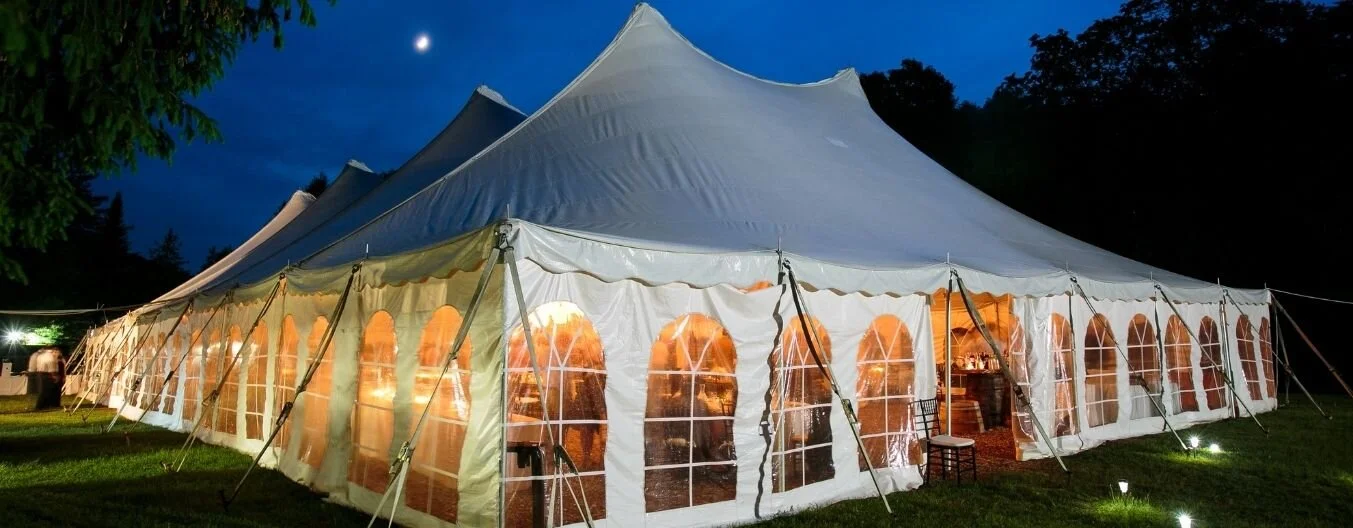
Tent Setup Considerations for High-Attendance Indoor-Outdoor Events
Planning a high-attendance tent setup is not just about choosing a large tent. It’s about designing a space that moves well, feels comfortable, and performs under pressure.
When your guest count climbs toward 100–200 people, small layout mistakes become major problems: congested entrances, bottlenecks near food stations, overcrowded seating, and poor flow between indoor and outdoor areas.
A successful event tent planning strategy eliminates those risks before they happen. Here’s how to approach capacity-based tent design the right way.
1. Start with Capacity—Not Just Square Footage
One of the biggest misconceptions in large tent layouts is assuming that more square footage automatically solves everything. It doesn’t.
The layout must match the type of event. Different setups require different space allowances per guest:
- Seated dinner (round tables): 10–12 sq. ft. per guest
- Ceremony seating (rows): 6–8 sq. ft. per guest
- Cocktail-style event: 8–10 sq. ft. per guest
- Dance floor included: Add 2–4 sq. ft. per guest attending
For example, a 150-guest seated dinner with a dance floor and buffet stations requires significantly more planning than a ceremony-only setup. Capacity-based tent design ensures guests feel comfortable—not cramped.
If you’re unsure how seating layouts translate inside specific tent dimensions, review how table counts and layouts work inside a 20x40 tent before finalizing your guest plan.
2. Choose the Right Tent Structure for Traffic Flow
Not all tents function the same way, especially for high-attendance events.
Frame Tents
- No center poles
- Maximum usable interior space
- Ideal for tight backyards or paved surfaces
- Better for complex, large tent layouts
Pole Tents
- Center poles create visual focal points
- Require staking into the grass
- Often more economical for wide-open spaces
For indoor-outdoor hybrid events, frame tents typically offer greater layout flexibility. Without interior poles, tables, staging, buffet lines, and dance floors can be positioned where they function best.
Explore our full range of white event tent rentals for backyard parties and large gatherings to compare size options and configurations that match your property layout.
3. Design for Flow Between Indoor and Outdoor Spaces
High-attendance tent setups often include a building-to-tent transition. That transition must feel natural.
- Where guests enter
- Where they check in
- Where drinks are served
- Where guests gather before seating
- Where lines may form
Avoid placing food, bars, or restrooms directly at transition points, as these areas quickly become bottlenecks.
- Keep entryways clear
- Create defined walk paths
- Position high-traffic stations along perimeter areas
Good event tent planning feels effortless to guests—even though it’s carefully engineered.
4. Don’t Forget the “Support Space”
Large tent layouts require more than tables and chairs. High-attendance events often need:
- Catering prep areas
- DJ or band staging
- Gift or registration tables
- Bar service stations
- ADA access paths
- Restroom trailer placement
- Heating or cooling systems
If these elements aren’t included in the original design, they begin to consume guest space and make events feel tight.
Don’t forget to account for staging, climate control, and audio support—our essential tent add-ons and event accessories help complete the setup without overcrowding your layout.
5. Plan for Weather Contingencies
Indoor-outdoor events are especially vulnerable to weather changes.
- Will sides be needed?
- Is flooring required?
- Do you need patio heaters?
- Is drainage a concern?
- Will wind impact pole placement?
A high-attendance tent setup should never rely on good-weather assumptions. Preparation protects both guests and your investment.
6. Prioritize Comfort and Safety
As guest counts increase, so does responsibility. Capacity-based tent design must account for:
- Clear emergency exit paths
- Stable anchoring
- Even ground leveling
- Adequate lighting
- Safe electrical routing
Guests should not experience:
- Squeezing between chairs
- Congested buffet lines
- Overcrowded bar areas
- Walking through mud
A well-designed layout anticipates stress points before the event begins.
7. Think Beyond the Tent Size
High attendance doesn’t automatically mean choosing the biggest tent available. Sometimes multiple connected tents or secondary spaces create better flow.
- Guest count
- Event type
- Property layout
- Ground surface
- Vendor needs
- Timeline
No two high-attendance events are identical.
Why Professional Planning Matters
As events approach 200 guests, details multiply quickly: tent size, layout flow, flooring, power, weather protection, support areas, and safety compliance.
When layout, capacity, and logistics align correctly, guests simply experience a seamless event.
Final Thoughts on High Attendance Tent Setup
Large guest counts demand structure, foresight, and precision. Successful events are built around:
- Clear traffic flow
- Accurate capacity planning
- Flexible layouts
- Weather readiness
- Operational support space
When these elements come together, your event runs smoothly from start to finish. Reserve your tent early to secure availability for peak event dates.
If you’d like help mapping out the ideal layout for your guest count, reach out through our event planning contact page to get started.