
Tent Setup Considerations for Cooler Evenings and Shorter Days
Your guests arrive during comfortable afternoon weather. Tables are set, the buffet is ready, and the tent looks perfect. Three hours later, temperatures have dropped fifteen degrees, daylight has faded, and guests are gathering near the entrance instead of enjoying the full space.
A successful fall tent setup accounts for the conditions your event will face during its final hour, not just when it begins. Cool weather tent planning means thinking through how temperature changes, shorter daylight hours, wind exposure, and ground conditions affect the way guests use your tent throughout the event.
The right approach combines site evaluation, tent configuration, compatible accessories, proper lighting, and safety-approved equipment. This guide explains which setup decisions you can make yourself, which equipment options may be necessary, and which details to confirm with your rental provider before event day.
What's Covered in This Guide
- Start With the Conditions Your Tent Will Face
- Choose a Tent Configuration That Supports Cooler Weather
- Plan for Temperature Changes Without Compromising Safety
- Account for Earlier Sunsets in Your Tent Setup
- Arrange the Interior for Evening Comfort and Movement
- Confirm Your Fall Tent Setup Before Event Day
- Frequently Asked Questions
Which Type of Event Host Are You?
Planning a Family Celebration
You need a comfortable space for guests of all ages. Evening temperatures, lighting for safety, and enough room for movement matter more than elaborate setups.
Hosting a Fall Wedding or Formal Event
Your event continues into the evening with seated dining and dancing. You need reliable temperature management, professional lighting, and a layout that works from cocktail hour through departure.
Organizing a Community or Corporate Function
You're coordinating equipment, managing a budget, and ensuring the setup accommodates variable weather. Clear logistics, practical comfort solutions, and confirmed equipment compatibility are priorities.
Start With the Conditions Your Tent Will Face
The best tent setup begins with understanding the environment your event will occupy, not just selecting a size and assuming it will work. Evening events require thinking beyond afternoon weather forecasts.
A location that seems perfectly comfortable at 3 p.m. may feel exposed and chilly by 7 p.m. Wind patterns change, shadows lengthen, and ground surfaces cool. Your tent needs to function throughout that shift.
Check Conditions for the Entire Event Window
Look at forecasted temperatures, wind speeds, and sunset times for your event date, not just the start time. If your event begins at 4 p.m. and ends at 9 p.m., the conditions at 9 p.m. determine your comfort requirements.
September evenings in Northeastern Pennsylvania might drop from 70°F to 55°F after sunset. October evenings can reach the low 40s. November events may require heating even if afternoon temperatures seem moderate.
Track weather patterns during the weeks before your event. Consistent cool nights suggest preparing differently than occasional cold snaps.
Evaluate Ground Conditions and Wind Exposure
An open lawn may look ideal, but fall ground conditions present challenges. Recent rain, morning dew, and softer soil affect tent stability and guest comfort. Areas that drain poorly can become unsuitable within 24 hours of heavy rain.
Wind exposure matters more during cooler months. A tent positioned in an open field faces different conditions than one placed near a building or tree line. Wind accelerates heat loss and makes guests uncomfortable even at moderate temperatures.
Pro Tip: Walk your event site during the time of day your event will occur. Note where wind comes from, where water collects, and how quickly the area cools after sunset. These observations guide practical setup decisions better than general assumptions.
Confirm that your chosen site provides adequate access for delivery trucks and setup equipment. Fall weather can make certain access routes impassable.
Choose a Tent Configuration That Supports Cooler Weather
Not all tents handle fall tent setup needs equally. The structure you select influences how guests move through the space, where equipment can be positioned, and which weather-protection options are compatible.
Consider How Guests Will Use the Interior
Frame tents provide unobstructed interiors without center poles, making furniture arrangement and guest circulation simpler. Pole tents use center support poles that require planning around.
Think about how your event flows. Seated dinners need clear paths between tables. Buffet setups require serving-line space. Mingling events benefit from open areas without structural obstacles.
As temperatures drop, guests naturally concentrate in warmer or more sheltered areas. A tent that feels spacious at the start may seem crowded once everyone moves away from open sides or entrances.
White party tent rentals come in multiple sizes and styles. The right choice depends on guest count, furniture layout, and whether you plan to add sidewalls or heating equipment that consumes floor space.
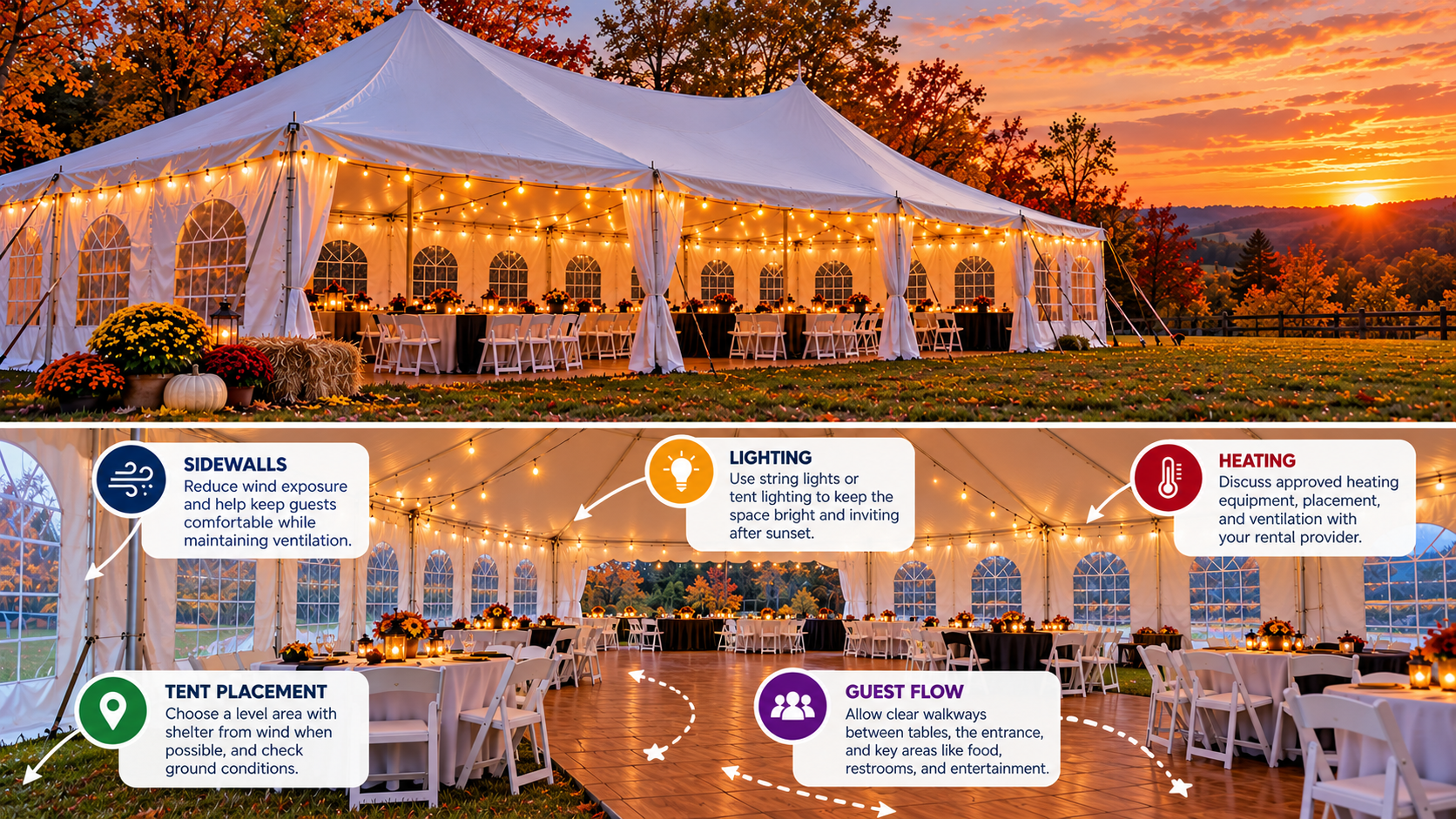
Evaluate Sidewalls Before the Event
Compatible sidewalls reduce exposure to wind and help retain any warmth generated inside the tent. They do not insulate the space or guarantee comfort in all weather, but they change how the tent functions.
Sidewalls affect ventilation. Fully enclosing a tent without proper airflow creates condensation and discomfort. If you plan to use heating equipment, ventilation requirements become critical safety considerations.
Sidewalls also influence entry points. You need enough accessible doorways for guests to enter and exit comfortably. Limiting openings too much creates bottlenecks, especially during arrival or departure.
↓ Sidewalls Help When:
- Wind is consistently moderate to strong
- Temperatures drop noticeably after sunset
- Rain or mist is forecasted
- The tent is positioned in an exposed area
- You're using compatible heating equipment
↑ Sidewalls May Complicate:
- Guest entry and exit flow
- Interior visibility and lighting
- Ventilation and air circulation
- Setup time and rental costs
- Access for catering or service staff
Discuss tent accessories including sidewall options with your rental provider. Confirm compatibility with your chosen tent and any other equipment you plan to use.
Plan for Temperature Changes Without Compromising Safety
Temperature-aware layouts begin with realistic expectations. Tents are temporary outdoor structures. They can be made more comfortable with proper equipment, but they are not indoor climate-controlled spaces.
Whether you need heating equipment depends on forecasted low temperatures, wind conditions, tent enclosure, event duration, and guest expectations. A cocktail reception where people move around requires different planning than a seated dinner where guests remain stationary.
Discuss Heating Equipment Before Finalizing Your Layout
Heating equipment must be used only in configurations explicitly approved by the manufacturer and rental provider. The tent type, sidewall setup, ventilation, clearances from tent fabric and furnishings, power or fuel source, and equipment placement all determine whether heating is safe and effective.
Forced-air tent heaters designed for event use can provide substantial warmth when properly installed. These units require electrical power, adequate clearance, professional positioning, and compatible tent configurations.
For a detailed explanation of heating considerations, equipment types, safety requirements, and setup planning, see our guide on how to heat party tents for cold-weather events.
Important Safety Note: Never use propane heaters, unvented equipment, or generators inside a tent without explicit manufacturer approval and professional installation. Improper heating creates serious fire and carbon monoxide risks.
Keep Access and Ventilation Requirements in the Plan
Any heating equipment consumes space. Units need clearance from walls, ceilings, furnishings, and walkways. Power cords or fuel lines must be positioned safely away from guest traffic.
Adequate ventilation prevents condensation buildup and ensures air quality. This may mean leaving certain sidewall sections open or using specific panel configurations. Your rental provider can explain what your chosen equipment requires.
Explore options like tent heating equipment early in your planning process. Availability may be limited during peak fall event season, and you need time to confirm compatibility and arrange proper installation.
Account for Earlier Sunsets in Your Tent Setup
Sunsets in Northeastern Pennsylvania occur before 6 p.m. by mid-October and before 5 p.m. by November. If your event extends past sunset, functional lighting is not optional.
Natural daylight through tent fabric provides adequate illumination during afternoon hours but disappears quickly once the sun sets. Guests need to see what they're eating, navigate safely, and locate exits.
Make Functional Lighting a Priority
Start with practical visibility. Dining areas need enough light for guests to see their plates and companions clearly. Buffet lines, dessert stations, and beverage areas require bright, even lighting.
Entry and exit points must be well-lit. Guests arriving after dark or departing at the end of the evening need to see steps, walkways, and door openings without hesitation.
Pathways between tables, around equipment, and through the tent interior require adequate illumination. Falls and trips increase in dim lighting, especially when guests are unfamiliar with the space.
Add Ambient Lighting Where Appropriate
Once functional needs are met, decorative lighting can enhance atmosphere. String lighting creates warmth and visual interest. Uplighting highlights tent structure.
All lighting must be professionally installed with secure mounting, protected connections, and cords positioned away from foot traffic. Electrical loads need proper distribution, and outdoor-rated equipment is essential.
Options like vintage string lighting for specific tent sizes provide both illumination and ambiance when correctly installed. Confirm compatibility with your tent dimensions and available power supply.
Pro Tip: Visit your tent site at the time of evening when your event will be underway. Note how dark it becomes and where shadows fall. This helps you communicate lighting needs accurately to your rental provider.
Arrange the Interior for Evening Comfort and Movement
How you arrange furniture, equipment, and guest spaces determines whether your tent functions well as conditions change. An arrangement that works beautifully during setup may create problems once guests arrive and temperatures drop.
Tables positioned too close together make movement difficult. Insufficient aisle width creates bottlenecks at buffets or bars. Equipment blocking sightlines or access points frustrates guests.
Consider where guests will naturally congregate. Areas near heaters, away from drafts, or close to food service become more popular as the evening progresses. Allow enough space in those zones.
Maintain clear paths to exits. Even partially enclosed tents need obvious exit routes that remain accessible throughout the event. Guests should be able to leave quickly if needed.
Before the Event Starts
- Guests spread throughout the space
- Natural light provides visibility
- Temperature feels comfortable
- Open sides allow airflow
- Movement is unrestricted
During the Event
- Activity concentrates near food and seating
- Artificial lighting becomes necessary
- Cooler air affects comfort
- Sidewalls or heating equipment operates
- Traffic patterns emerge
As the Event Ends
- Guests gather near warmest areas
- Exits must remain clear and visible
- Temperature reaches its lowest point
- Condensation may appear
- Departure flow matters for safety
Adding heating equipment, lighting, or sidewalls reduces available floor space. Account for this when planning table quantities and arrangements. Your rental provider can help you calculate realistic capacity once equipment is included.
Confirm Your Fall Tent Setup Before Event Day
Use this checklist to verify that your tent setup addresses seasonal considerations and that all necessary details are confirmed with your rental provider.
Site and Timing
- Event start and end times documented
- Forecasted temperatures reviewed for entire event window
- Sunset time noted and lighting planned accordingly
- Ground conditions assessed and confirmed suitable
- Wind exposure evaluated
- Delivery and setup access confirmed
Tent Configuration
- Tent size appropriate for guest count plus equipment
- Tent type chosen based on layout needs
- Sidewall compatibility confirmed
- Entry and exit points planned
- Ventilation requirements understood
Equipment and Accessories
- Heating equipment discussed and safety-approved if needed
- Functional lighting planned for all areas
- Furniture quantities adjusted for equipment space
- Power requirements confirmed
- Equipment clearances and placement verified
Guest Comfort and Safety
- Interior arrangement allows comfortable circulation
- Emergency exits clearly identified
- Weather monitoring plan established
- Contingency options discussed with rental provider
- Setup and takedown timing confirmed
Review weather forecasts in the days before your event. If conditions change significantly, contact your rental provider to discuss adjustments. Most providers can accommodate last-minute additions of sidewalls or other accessories if inventory permits.
Explore Fall Tent Rentals With CSE Services
CSE Services provides party tent rentals, compatible accessories, and event equipment throughout Northeastern Pennsylvania. Our inventory includes white frame and pole tents in multiple sizes, sidewalls, heating options, lighting solutions, and complete furniture packages.
Browse available equipment online, check real-time availability for your event date, and reserve everything you need through one straightforward process. Our team can answer questions about tent configurations, equipment compatibility, and seasonal setup considerations.
We focus on helping you plan a functional, comfortable event space that works throughout your entire celebration, from setup to departure.
Ready to Plan Your Fall Tent Setup?
Explore tent rentals and compatible equipment for your upcoming event. Check availability, compare options, and reserve online.
Book Online Now!No pressure, no pitch. Just straightforward equipment rental and helpful service.
Frequently Asked Questions
What should I consider when planning a tent for a cool evening?+
Start by evaluating temperatures throughout your event, not just at start time. Consider wind exposure, ground firmness, drainage, and how darkness will affect guest movement. Assess whether sidewalls, approved heating, functional lighting, and adequate circulation space are necessary. Confirm site access for delivery and setup, and plan for changing conditions between afternoon and evening.
Do I need sidewalls for a fall party tent?+
The decision depends on expected wind, temperature, and exposure. Compatible sidewalls can reduce drafts and weather exposure but do not insulate a tent or guarantee warmth. They also affect ventilation, entry points, and visibility. Discuss sidewall options with your rental provider based on your specific event conditions, tent type, and any heating or lighting equipment you plan to use.
Can I use a heater in a party tent?+
Heating equipment can only be used in configurations explicitly approved by the manufacturer and rental provider. The tent type, sidewall setup, ventilation requirements, clearances, power or fuel source, and equipment placement all determine safety and suitability. Never install propane heaters, generators, or unvented equipment without professional confirmation. Discuss heating options early in your planning process.
What lighting should I consider for a tent after sunset?+
Prioritize functional lighting for dining areas, entrances, serving stations, steps, and walking paths. Guests need visibility to eat, move safely, and locate exits. Ambient or decorative lighting can enhance atmosphere once practical needs are met. All lighting must be professionally installed with cords secured away from foot traffic and power connections protected from weather.
When should I finalize a fall tent setup?+
Make initial equipment decisions as early as possible to secure availability. Confirm delivery logistics, site access, and installation details with your rental provider several weeks before the event. Review weather forecasts in the days leading up to your event, and discuss contingency options if conditions change. Early planning allows time to adjust your setup without last-minute complications.